Blog
Common Router Bits & Engraving Cutters: Basic Knowledge Guide

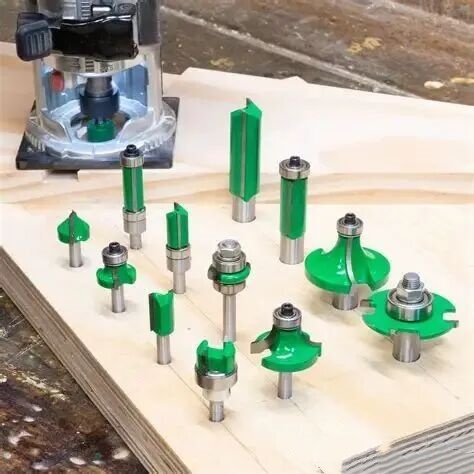
A straight router bit is the first cutter most woodworkers buy and the last one they stop reaching for. Together with bearing-guided trimmers, roundover bits, T-slot cutters and engraving cutters, it covers grooving, joinery, edge shaping and sign making. This guide explains size marking, bit families, engraving cutter specifications, material settings and machine notes in practical language.
Router Bit Size Marking & Unit Conversion
Imperial to metric conversion matters whenever you order tooling from overseas. One inch equals 25.4 mm, so 1/4 inch equals 25.4 ÷ 4 = 6.35 mm. Apply the same rule to every other size.
Router Bits in the Workshop
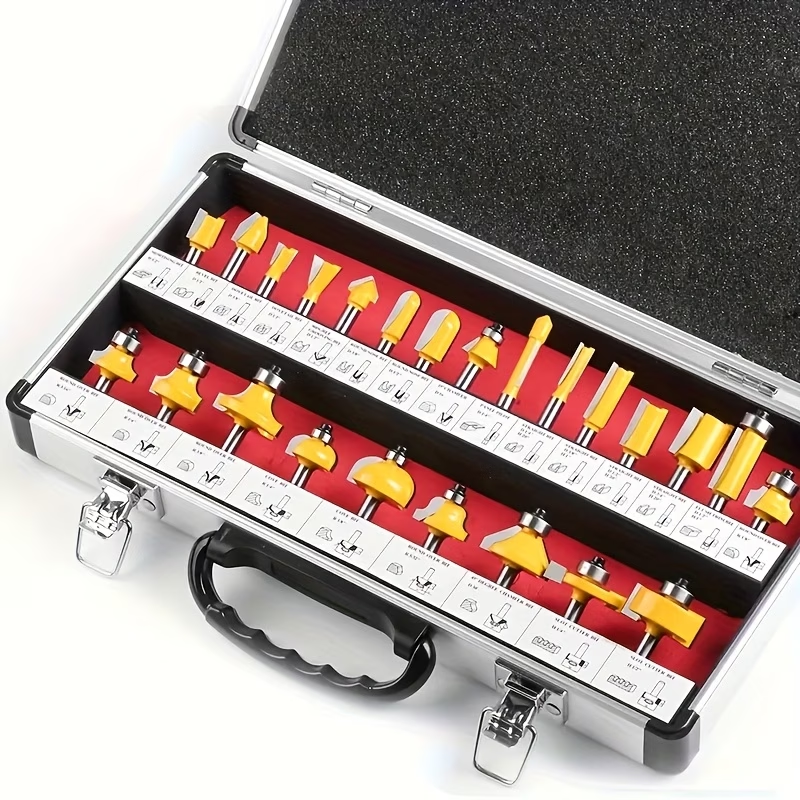
Also known as shank-type cutters, these tools are widely used in furniture manufacturing. They handle decorative profiles and the small-batch production that large machines cannot take on.
Router Bit Composition
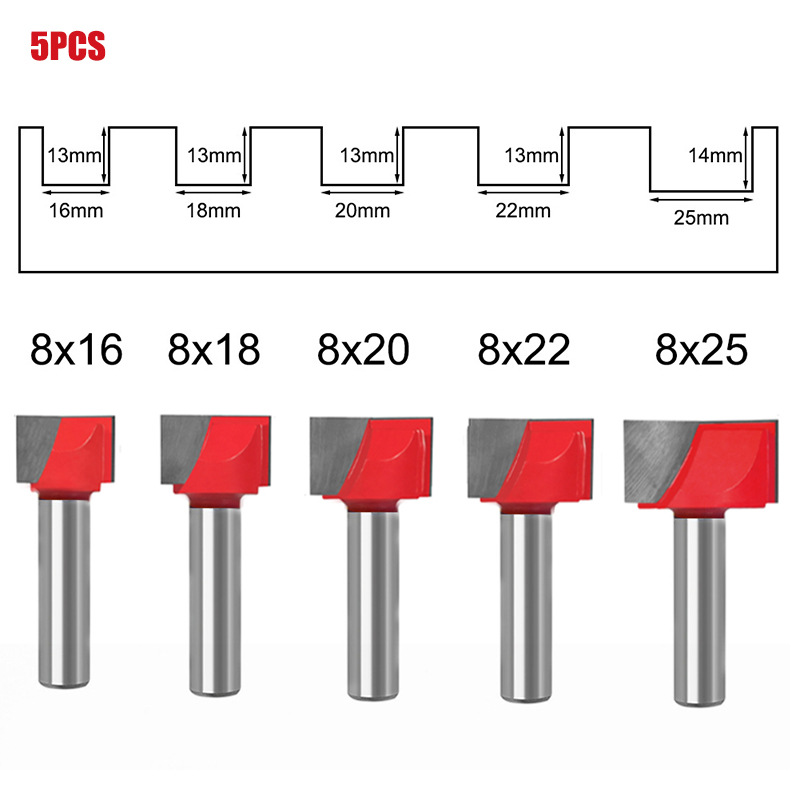
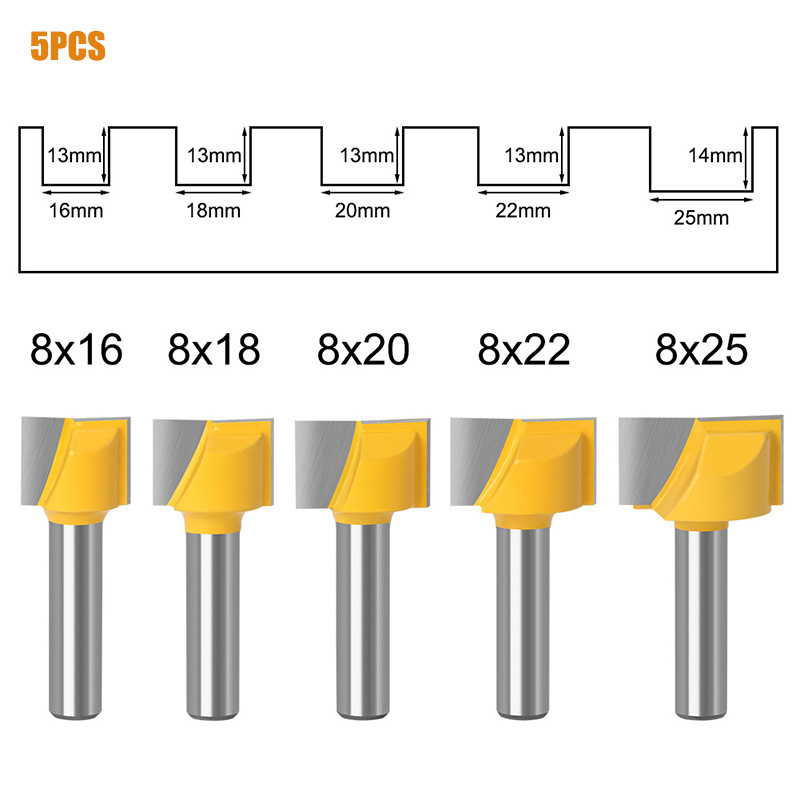
Specification format reads as Shank Diameter × Cutting Diameter. The most common shank sizes are 1/2″ and 1/4″, while metric shanks usually come in 6 mm and 12 mm.
Compatible Machines
They work with table routers (bit downwards, counterclockwise rotation), overhead hanging routers (bit upwards, clockwise rotation), handheld trim routers, engravers and CNC machining centres. All of these machines run at speeds of tens of thousands of RPM.
Classification by Cutting Style
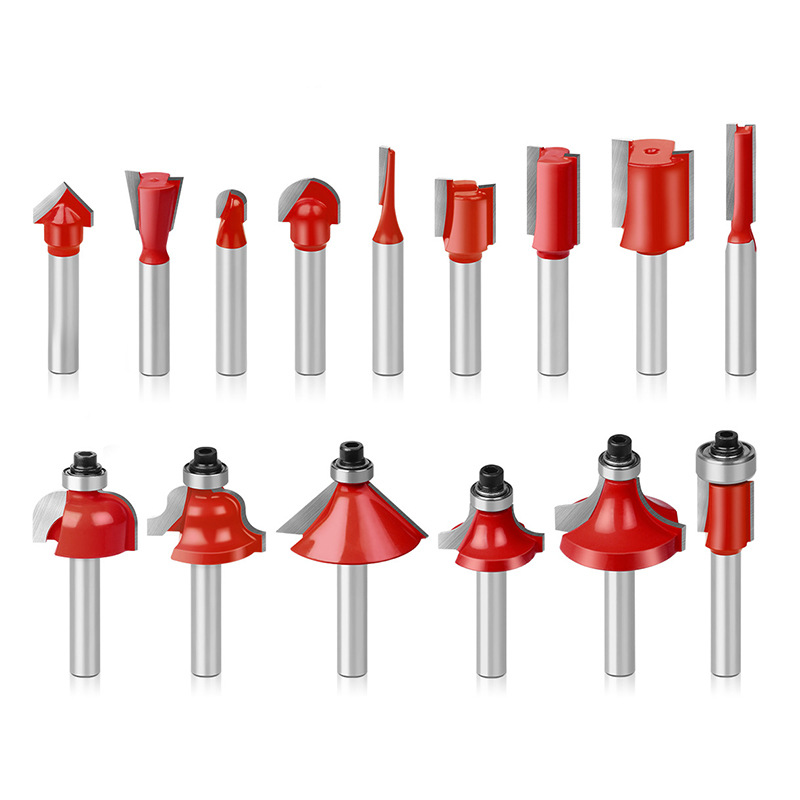
Two categories dominate: bearing-guided bits and non-bearing bits.
- Bearing-guided bits: the bearing acts as a rotating template stop, so the cutting edges on both sides shape edges while rolling along the workpiece.
- Non-bearing bits: cutting edges sit on the tip, letting the tool plunge into the middle of wood and carve patterns. Woodworkers also call these engraving bits.
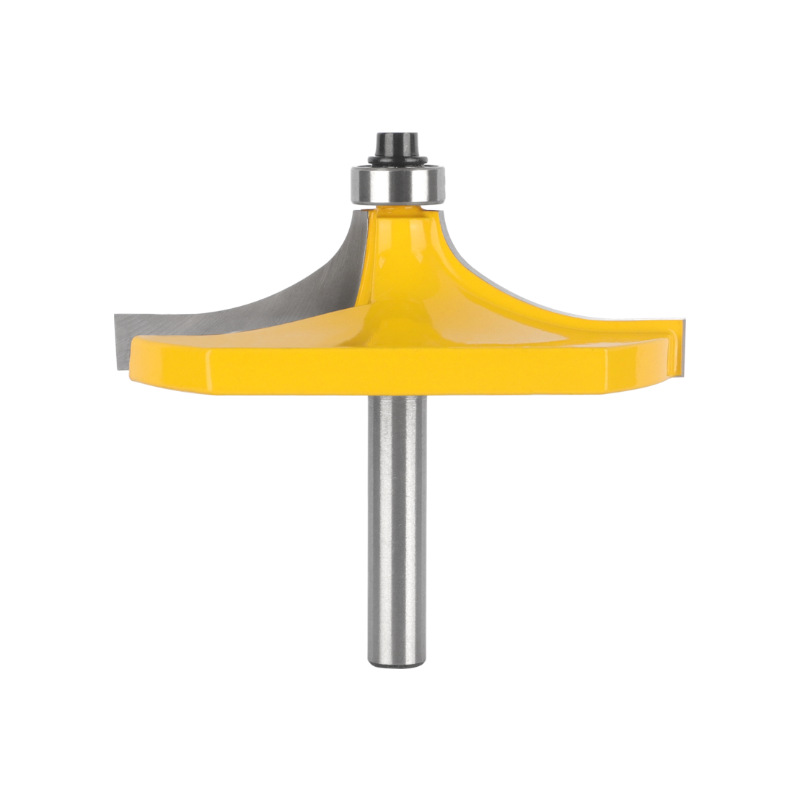
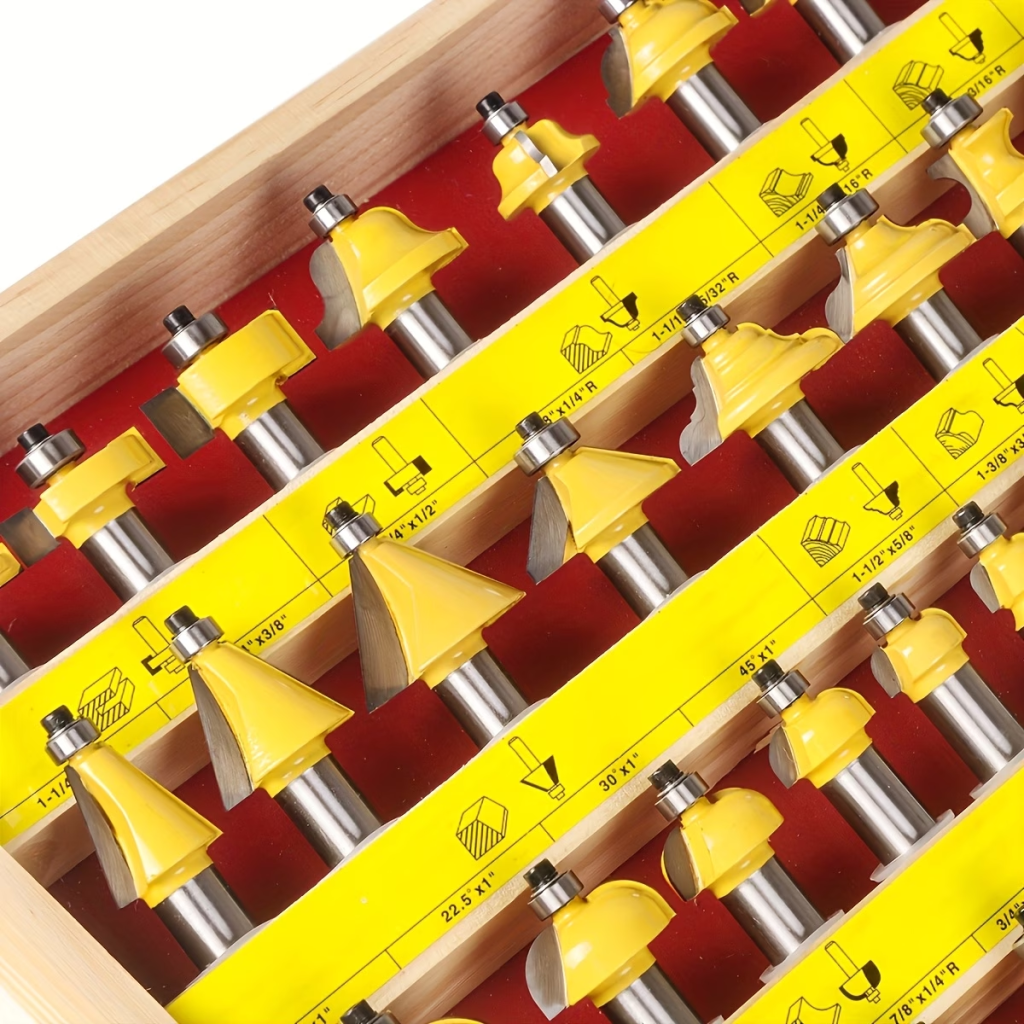
Table edge molding bits usually produce decorative mouldings on tabletops.
Five Bit Types Worth Owning
Straight Router Bit
Use this straight router bit to mill grooves of various widths, plus tenons and mortises. With simple jigs, the same tool cuts straight tenon joints, finger joints and panel glue-ups. Sizes vary widely, although 1/4″ and 1/2″ remain the most popular.
For grooves wider than 1/2″, take several passes. Grooves between 1/4″ and 1/2″ can be cut with a 1/4″ bit in repeated passes. Grooves narrower than 1/4″ are rare, and when needed, many woodworkers switch to an inverted circular saw.
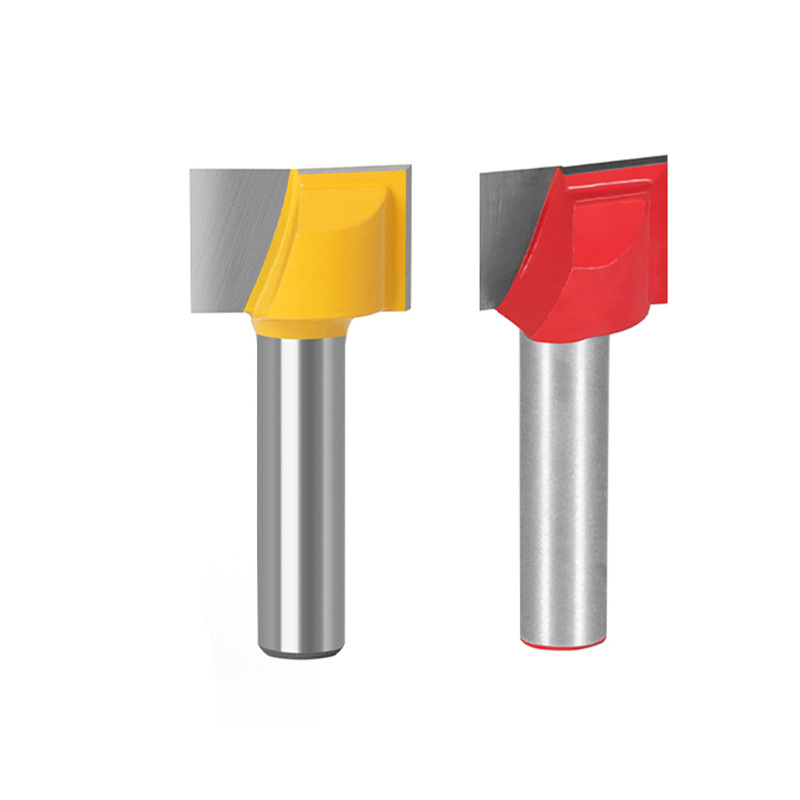
The bottom cleaning bit is a useful variant. Its cutting edge protrudes slightly downward with limited plunge ability, which makes closed grooves easier. Because that plunge capacity is weak, deep grooves need multiple passes, so many woodworkers prefer the standard straight router bit plus pre-drilling. Bottom cleaning bits also flatten timber surfaces with simple jigs, partly replacing hand planes, although the method takes many passes and a lot of patience.
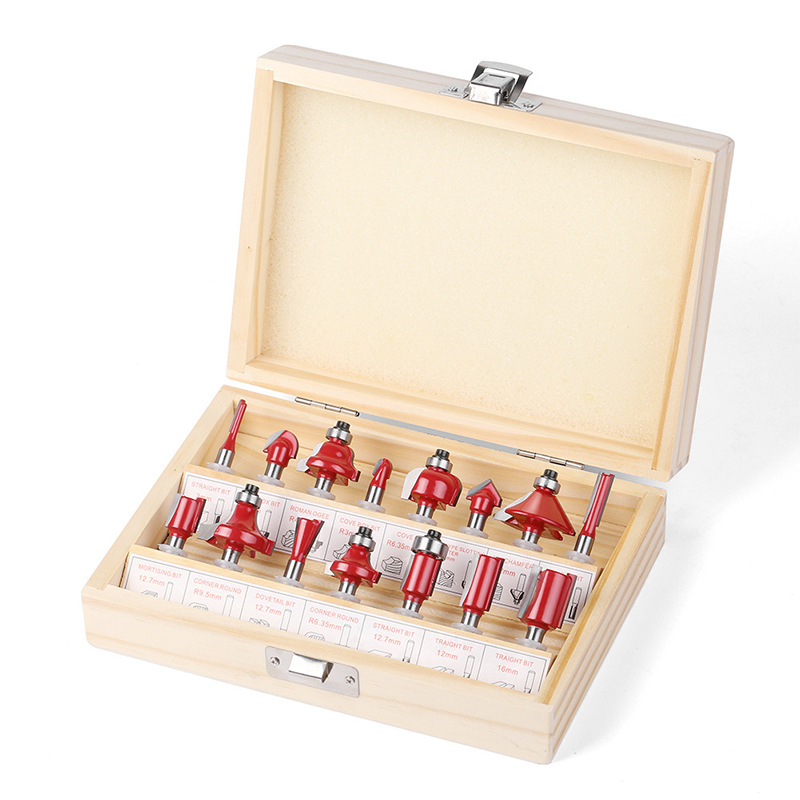
Our straight router bits cover grooving, tenoning and panel work across the common diameters.
Flush Trim and Pattern Trim Bits
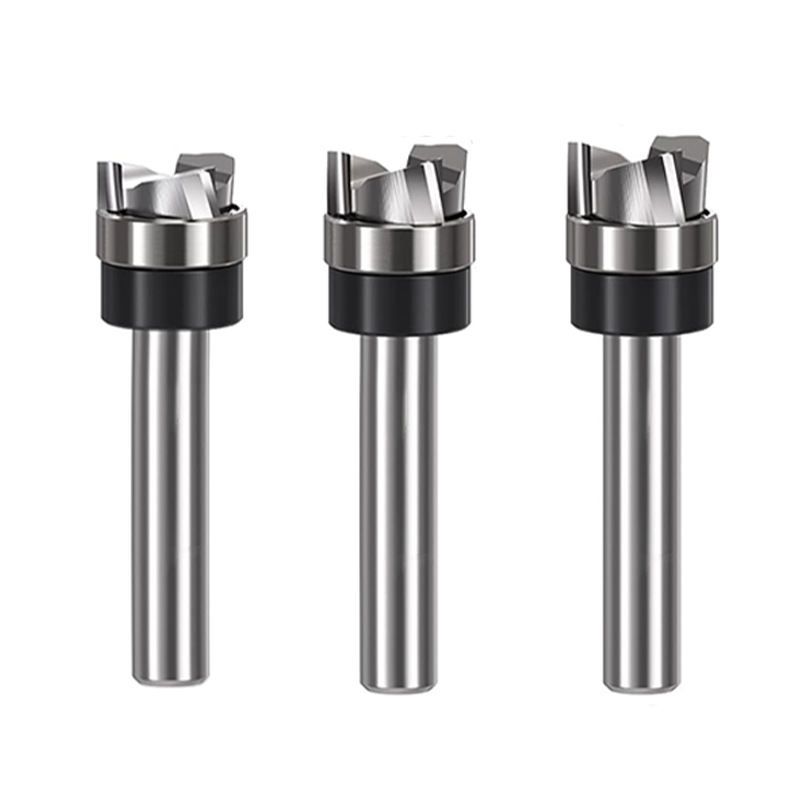
These are essentially straight router bits fitted with bearings. The flush trim bit carries its bearing on the cutting head side, while the pattern trim bit carries it on the shank side.
Three applications dominate:
- Edge trimming: clamp the workpiece to the table edge, then run the bearing along that edge to straighten it.
- Duplication: make one master template, rough-cut the remaining blanks, then trim them to match.
- Template routing: build templates from easy-to-machine materials such as hard cardboard for custom shapes.
Keep both types on hand and choose by job. A pattern trim pass can also be done with a straight router bit plus guide bushings.
Roundover Bits
Roundover bits create smooth rounded edges on workpieces, and combined with other bits they build complex curved profiles. With a simple jig, you can even mill square stock into small-diameter cylinders. Built-in bearings make these tools convenient on handheld routers, especially with large and heavy stock, while inverted router tables handle smaller parts better. Roundover bits come in many radii — the common sizes are 1/4″ and 3/8″, and if budget allows, add 1/8″, 1/2″ and 3/4″.
T-Slot Cutters
This cutter is not always needed, yet it becomes extremely handy once you own one. A straight router bit with a jig can copy the result, but the dedicated cutter saves a lot of setup time. Swap bearings, and one cutter produces grooves of varying depths.
Spiral Straight Bits
Shank recommendation: choose a 1/2″ shank whenever possible, because it stays stronger and more rigid than 1/4″.
Types of Engraving Bits
The family covers single-flute end mills, double-flute end mills, double-flute ball nose bits, straight taper bits, flat bottom taper bits, straight flute bits, 3D V-bits and more.
Engraving Bit Uses & Characteristics
- They suit cutting and engraving of acrylic, PC plastic, PVC, aluminium composite panel, soft wood and aluminium sheet.
- Typical features include a solid carbide body, mirror-polished cutting edges and large-capacity chip flutes, which reduce chip adhesion and heat build-up for a superior finish under high-speed cutting.
- Common materials are tungsten steel, high-speed steel and solid carbide.
- Single versus double flute: a single-flute end mill cuts less efficiently, since fewer edges engage at identical RPM, yet it leaves an excellent finish. A double-flute end mill cuts more efficiently, although small differences in angle and height between the two flutes may give slightly poorer surface quality.
Five Factors Affecting Machining Results
- Workpiece material type and thickness
- Cutting feed speed
- Tool spindle speed
- Engraving pattern style
- Machine setup
Change one factor at a time, and you will find a stable setup much faster.
Operation Notes
For premium cutting surfaces and longer tool life, use high-precision, high-rigidity cutters and machines.
- Check tool runout before every job. If runout exceeds 0.01 mm, fix it before cutting.
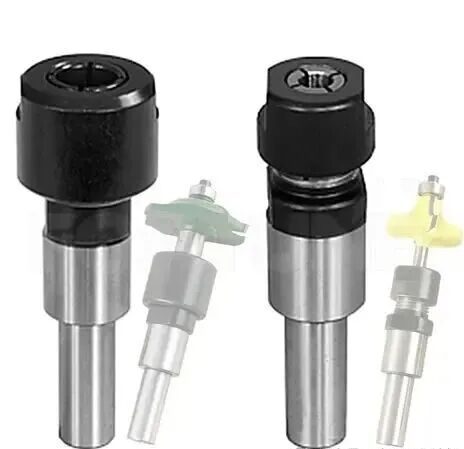
- Minimize tool overhang from the collet. When longer overhang is unavoidable, reduce spindle speed, feed rate and cutting depth.
- Stop immediately if abnormal vibration or noise appears, then lower spindle speed or cutting load. Resume only after conditions stabilize.
- Parameters depend on workpiece, machine and software. Once cutting is stable, increase feed speed by 30%–50%.
Machine Classification
CNC engraving machines group by application: advertising engravers, wood engraving machines and metal engraving machines.
- Advertising engravers: cut and engrave acrylic, PVC, foam board and MDF for signs and crafts.
- Wood engraving machines: handle solid wood, bamboo products, furniture, interior decoration and wooden artworks.
- Metal engraving machines: designed specifically for metal processing.
Engraving bits are consumables for CNC routers. The main categories are router bits, taper bits, 3D bits, cylinder bits, bottom cleaning bits and decorative molding bits. Router bits, taper bits and 3D bits offer the widest model range, chosen according to machining requirements and materials.
Machining Recommendations by Material
- Acrylic cutting: choose imported single-flute end mills for smoke-free, fast cutting with no chip sticking. For a matte finish, use 2-flute or 3-flute spiral bits.
- MDF cutting (advertising mould making): pick double-flute high-volume spiral end mills, whose two large chip flutes and balanced design prevent burning or smoking.
- Aluminium sheet cutting: use special single-flute aluminium end mills for anti-chip-welding performance plus fast, efficient cutting.
- Precision small relief carving: choose round tip engraving bits.
- Deep relief on softwood, MDF, solid wood, PVC and acrylic: use single-flute spiral ball nose end mills.
- Burr-free top and bottom cutting: choose single-flute or double-flute upcut or downcut bits.
- Metal engraving: use single-flute or double-flute straight flute flat taper bits.
- 3D bits: high concentricity and sharp edges deliver precision 3D relief carving.
- MDF and solid wood machining: serrated corn mill bits work well.
- Plywood and veneer sheets: pick double-flute straight flute end mills.
- Downcut bits: produce burr-free top surfaces and reduce workpiece lifting.
- Metal mould milling: tungsten steel cutters with a purple-black hard titanium coating.
- Mirror acrylic engraving: diamond engraving bits.
- Rough cutting particle board: multi-serrated router bits.
Common Engraving Bit Categories
- End mills (single-flute / double-flute): among the most widely used engraving cutters. Classified by geometry as double-flute, single-flute or ball nose, and by flute type as spiral or straight flute. Since the advertising industry mostly processes acrylic, PVC and MDF, double-flute spiral bits dominate, although single-flute end mills also suit acrylic, PVC, plastic sheet, plywood and wood. Note that slender or extended-length bits are unsuitable for acrylic. Spec notation: Shank Diameter × Cutting Diameter × Flute Length.
- Flat bottom taper bits: also called taper bits, widely used in advertising sign engraving. Flat bottom versions dominate sign making, while straight flute taper bits suit aluminium, copper, iron, hardwood and other hard materials. Spec notation: Shank Diameter × Tip Diameter × Included Angle.
- 3D bits: built for 3D relief carving, and they also chamfer acrylic, MDF and PVC. Strengths include excellent concentricity, sharp cutting edges and no residual chips at the bottom. They divide into single-flute and double-flute 3D bits. Spec notation: Shank Diameter × Cutting Diameter × Included Angle.
- Cylinder bits: also called small cylinder bits, used for thin sheet cutting and engraving such as two-colour boards, acrylic and IC cards. They are popular for name badges and small identification plates, mostly in single-flute form with a limited model range. Spec notation: Shank Diameter × Cutting Diameter × Flute Length.
- Lettering engraving bits: the main difference is cutting angle, with common angles of 30°, 45° and 60°.
Frequently Asked Questions
Which cutter should a beginner buy first?
Start with one good 1/2″ shank bit for grooves, then add a flush trim bit and a roundover bit. Those three cover most early projects.
What is the difference between a straight router bit and a trim bit?
A straight router bit has no bearing, so you guide it with a fence or jig. A trim bit adds a bearing that follows a template or board edge, which is why trimming and duplication become repeatable.
Can roundover bits work on a handheld router?
Yes. Their built-in bearing makes them a natural fit for handheld work, particularly on large or heavy panels that will not slide easily over a router table.
How do you convert router bit sizes?
Multiply the imperial size by 25.4. So 1/4 inch becomes 6.35 mm, and the same rule applies to every other size.
Final Word on Bit Selection
Start with a few reliable profiles, learn their limits on scrap stock, then expand the collection as projects demand it. Pay attention to shank diameter, keep runout low and match the cutter to the material. When you are ready to add more sizes, browse our straight router bits for grooving and joinery to fill the gaps in your kit.