Blog
10 Essential CNC Router Bits for Professional Furniture Manufacturing

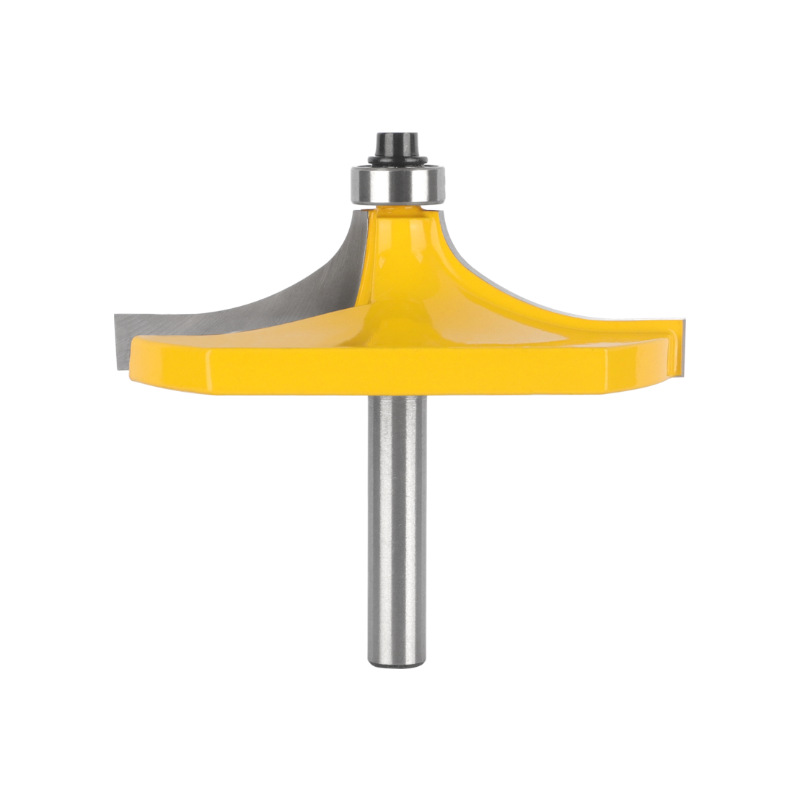
High-quality CNC router bits are the core foundation of furniture manufacturing. In modern woodworking, different router bits determine cutting accuracy and edge finish. They also affect processing efficiency and the quality of finished furniture. Whether you build cabinets, solid wood furniture, or decorative parts, the right CNC router bits help. They improve workflow stability and reduce post-processing work. This article summarizes the 10 most common CNC wood router bits. We cover their key features, advantages, and limitations in daily production.
1. Straight Router Bits — The Universal Foundation
To begin with, straight router bits are the most universal tool in CNC woodworking. Featuring straight cutting edges, these bits remove material with precision. They are designed for clean grooving and accurate edge trimming. They come in many diameters and cutting lengths. Therefore, they handle rectangular grooves, half grooves, and mortise holes. In real production, straight bits support plunge cutting and edge cutting. They suit most basic flat wood jobs.
One major strength is strong versatility. They create flat, smooth bottoms and neat straight channels. Furthermore, users can apply high feed rates on soft wood to speed up work. Even so, straight bits have drawbacks. Compared with spiral bits, they create more friction heat. In addition, wrong speed settings may cause grain tear-out and hurt finish quality.
2. Carbide Spiral Router Bits — The High-Speed Upgrade
When it comes to high-speed CNC machining, carbide spiral router bits are the best upgrade. Unlike straight bits, spiral bits use flute structures that improve chip removal. Timely chip evacuation lowers heat and avoids wood burning. Made of hard carbide, these bits last longer and cut durably. Thus, they reduce tool replacement costs for mass production.
They include three types: up-cut, down-cut, and compound. Therefore, manufacturers can match the bit to surface and chip needs. Spiral bits give smoother edges with less vibration. They also support higher feed rates without losing precision. However, they cost more than HSS straight bits. In addition, they need high-horsepower CNC machines. For this reason, many shops pair spiral bits with quality wood router bit to balance cost and performance.
3. Round-Over Router Bits — Safe and Beautiful Edges
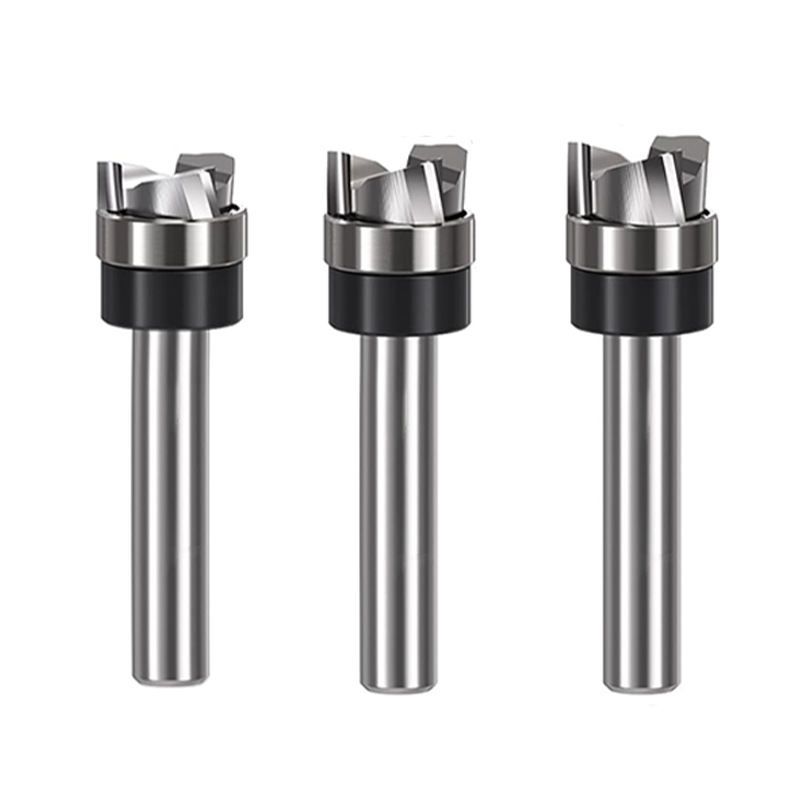
For edge beautification, round-over router bits are widely used in finishing. Equipped with arc edges and ball bearings, they keep a consistent depth. They create uniform rounded edges on tables, cabinets, and chairs. Their biggest advantage is safety. They remove sharp corners and cut manual sanding work. Furthermore, users can invert the bit to make bead lines for styling.
However, they only suit arc profiles. For large radii, multiple passes are required for smooth results. Even so, they remain a favorite for safe, refined furniture edges.
4. Six More Specialist Bits for Targeted Jobs
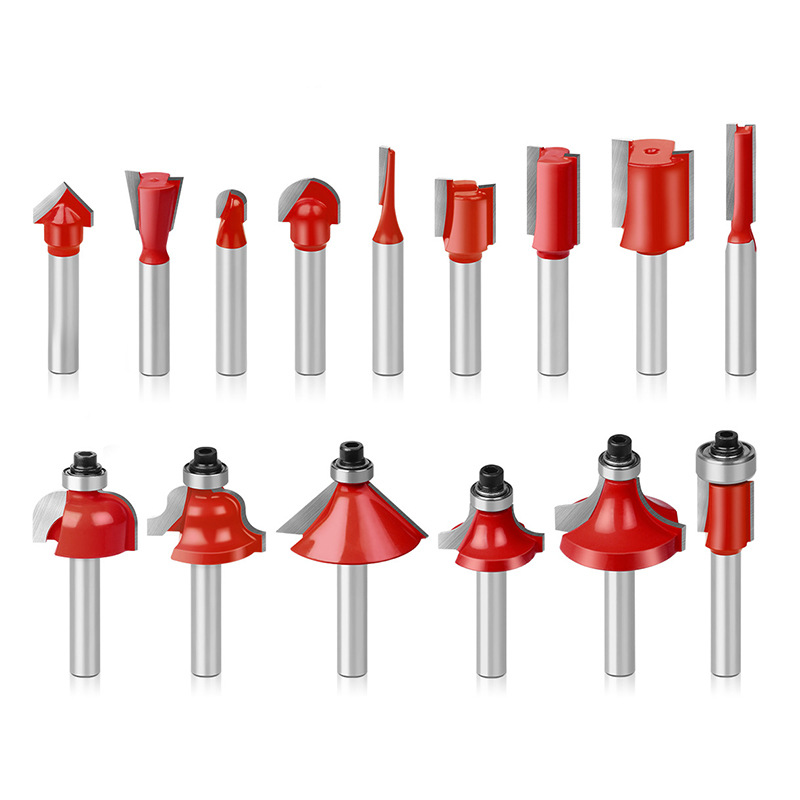
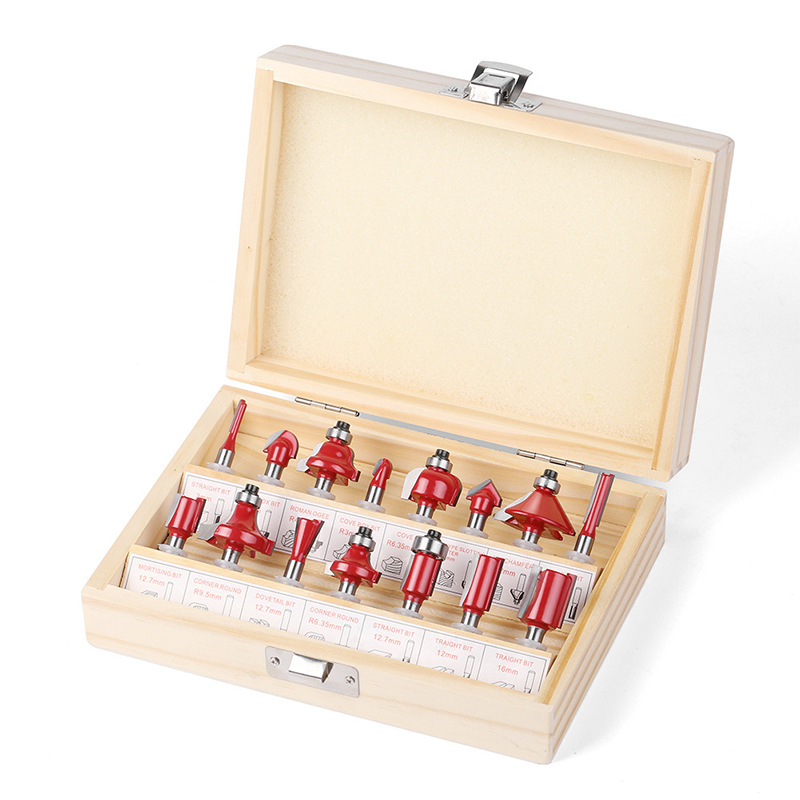
Apart from the three main tools, specialist cutters handle targeted jobs. Flush trim bits copy templates for accurate trimming. Chamfer bits make bevel edges and angled grooves. Cove bits form concave curves, while ogee bits make S-shaped lines. Dovetail bits build strong joints for drawers and cabinets. V-groove bits focus on engraving and anti-slip surfaces.
Finally, ball nose bits enable 3D relief carving on decorative parts. Each bit has unique advantages. Yet all are limited to fixed profiles and need precise settings. Together with straight, spiral, and round-over cutters, these seven complete the 10 essential CNC router bits. For best results, source durable CNC router bits and match each to its material and pass plan.
Conclusion: Build Your CNC Router Bit Collection
Selecting the right CNC router bits improves cutting accuracy and edge quality. Straight bits give universal grooving. Spiral bits deliver clean high-speed cuts. Round-over bits add safe decorative edges. Combined with flush trim, chamfer, cove, ogee, dovetail, V-groove, and ball nose cutters, any workshop covers full furniture needs. By understanding each type’s pros and cons, woodworkers reduce waste and achieve consistent, professional results.