Blog
Router Bits Buying Guide: Pick Right the First Time


Buying your first cutters is confusing, because the shelf offers hundreds of shapes. Consequently, a good router bits buying guide starts with three questions. What are you making? Which router do you own? How often will you cut?
This guide answers those questions in order. First we cover what a bit is. Then we look at material, shank size and profile. Finally, we build a starter set.
Router Bits Buying Guide: What a Bit Is
A router bit is a rotating cutter held in the collet of a router. Because the collet grips the shank, the cutting part spins at the set speed.
A router bits buying guide often starts with the machine, and that order is correct. Because the collet fixes the shank size, your router decides half of the list. That decision comes before you look at any profile.
The tool shapes wood in three broad ways. It cuts grooves, it trims edges, and it forms decorative profiles. Therefore, one machine covers a wide range of joinery and trim work.
Meanwhile, the same bit works in a hand router or a router table. In practice, the table suits small parts, while the hand router suits large panels.
Carbide or High Speed Steel
Material decides how long an edge lasts. Therefore, this is the first choice to get right.
- Carbide tips stay sharp for a very long time in wood and board.
- High speed steel cuts cleanly but dulls quickly in hard material.
- Carbide handles MDF and plywood far better than steel.
- Coated carbide resists resin build-up on tropical hardwoods.
- Steel still suits very cheap, low volume work.
As a result, most woodworkers should buy carbide and skip steel. Because the price gap is small today, carbide pays for itself within a few jobs.
In addition, check how the tip is fixed. A brazed tip from a reliable maker holds better than a thin, poorly bonded one.
Shank Size: 1/4 Inch or 1/2 Inch
The shank is the plain shaft that enters the collet. Its size must match your router, so measure before you order. A router bits buying guide should treat shank size as a hard limit, not as a preference.
- A 1/4 inch shank fits compact and trim routers.
- A 1/2 inch shank fits most full size routers.
- A larger shank flexes less, so cuts stay accurate.
- A larger shank also takes deeper passes safely.
- A reducer sleeve adapts a 1/2 inch collet to 1/4 inch.
However, a reducer sleeve adds a little runout. Therefore, use it only when you must, and keep it clean.
Because a 1/2 inch shank resists deflection, wide cutters need it. Meanwhile, small bits run perfectly well on a 1/4 inch shank.
The Main Profiles at a Glance
Profiles fall into a few families, and each family does a job.
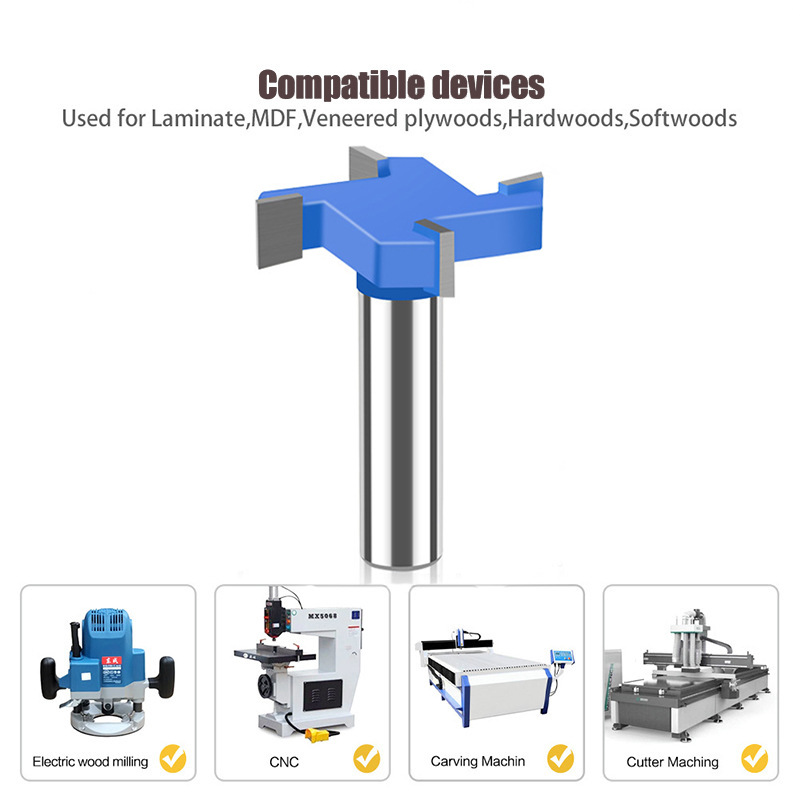
- Straight bits cut grooves, rebates and flat bottoms.
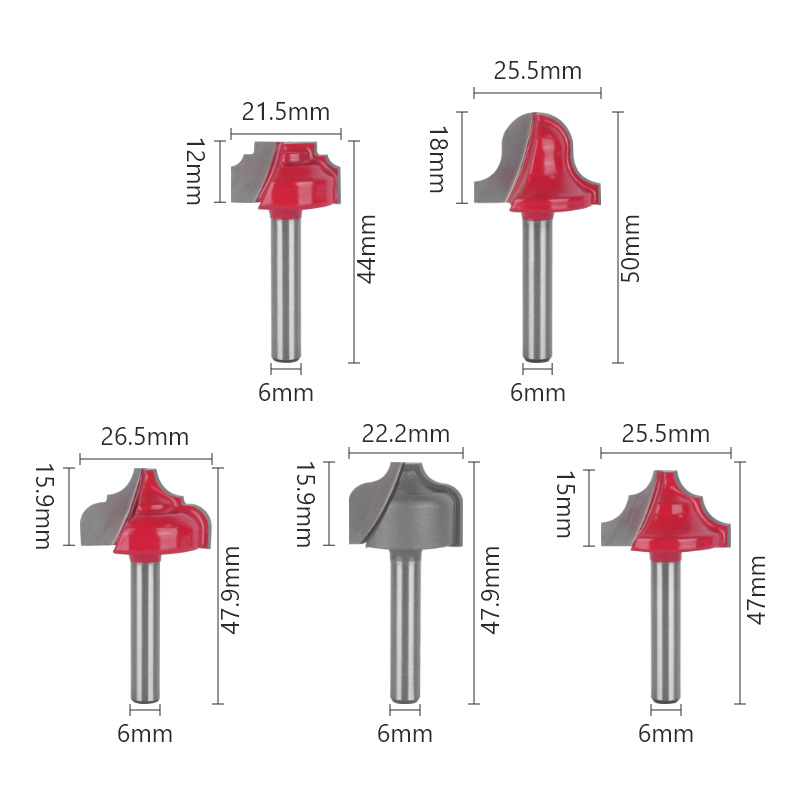
- Roundover bits soften edges with a curve.
- Chamfer and bevel bits cut a flat angled face.
- V-groove bits carve lines and lettering.
- Dovetail and box joint bits cut interlocking joints.
- Flush trim and bearing bits copy a shape onto another part.
Therefore, buy by task rather than by shape. A clear task always points to one family, and this router bits buying guide follows that rule throughout.
A Starter Five for New Woodworkers
You do not need a huge set. In fact, five cutters cover most beginner projects.
- One straight bit at 1/4 inch for grooves and rebates.
- One roundover bit at 1/4 inch for edges.
- One chamfer bit at 45 degrees for corners.
- One flush trim bit with a bearing for trimming.
- One round nose bit for slots and curves.
After that, add tools as projects demand them. Because each purchase follows a real need, your shelf stays useful.

Mistakes That Cost Money
New buyers repeat the same errors, so watch for these.
- Buying steel to save a little money, then replacing it fast.
- Ignoring shank size and ordering the wrong fit.
- Choosing a big set full of duplicate profiles.
- Skipping the bearing on trimming work.
- Never testing a new cutter on scrap first.
Therefore, spend your budget on fewer, better cutters. In fact, three excellent bits beat fifteen poor ones. Then compare profiles and shank options in a wider router bits range before you commit.
FAQ
Is carbide worth the extra cost? Yes for almost every workshop. A router bits buying guide should start with carbide as the default.
Can I use one shank size only? Often, yes. A 1/2 inch shank covers most work, and a sleeve handles 1/4 inch bits.
How many bits do I really need? Five good cutters cover most jobs. Add more only when a project requires them.
A sensible purchase follows the work, not the shelf. Decide the task, match the shank, and pick carbide. Then review a dependable router bit collection and buy the five that fit your bench.