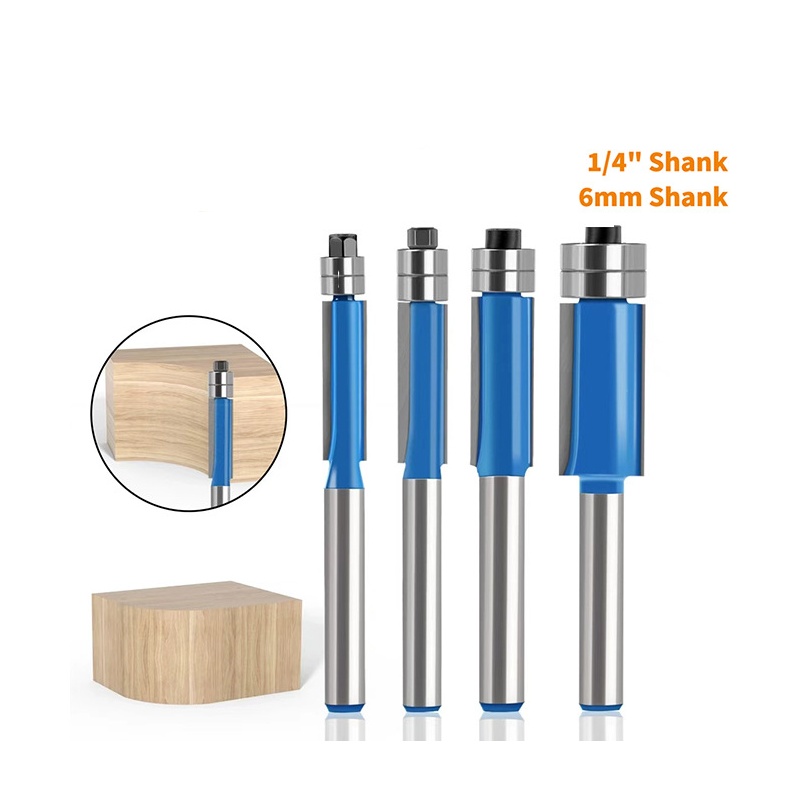
Difference Between Plunge and Non-Plunge Trimming Router Bits
Many users ignore the plunge cutting performance when purchasing trimming router bits and straight router bits, resulting in inability to complete blind groove and closed mortise processing. Not all trimming woodworking router bits support vertical plunge cutting. Ordinary non-plunge trimming router bits can only cut from workpiece edges and are limited to open groove and edge trimming tasks.
Plunge-capable trimming router bits adopt optimized cutting tip geometry, which allows vertical downward feeding to realize direct drilling and grooving on flat workpiece surfaces. This performance breaks the processing limitation of traditional edge-entry tools, enabling woodworking router bits to complete closed blind grooves, embedded mortises and internal positioning grooves without edge penetration.
Application Advantages of Plunge Trimming Router Bits
Plunge trimming router bits greatly expand the processing range of conventional woodworking router bits. In furniture structural processing, many hardware mounting grooves and hidden connection mortises are closed blind structures that cannot be processed by edge cutting. Plunge straight router bits and plunge trimming router bits can vertically feed to the fixed depth in one time, realizing precise forming of blind grooves.
This processing method avoids auxiliary cutting and secondary trimming, improves the integrity of workpiece structure, and reduces material waste. For customized furniture, wooden box structures and wood art inlay processing, plunge-capable woodworking router bits are essential professional tools to ensure structural accuracy.
Selection Suggestions for Daily Production
For users who only need open groove cutting and edge trimming, ordinary non-plunge trimming router bits can meet basic needs with higher cost performance. For workshops involving mortise and tenon structure production, blind groove processing and internal grooving, it is necessary to prioritize plunge-capable woodworking router bits to cover all processing scenarios and improve tool versatility.