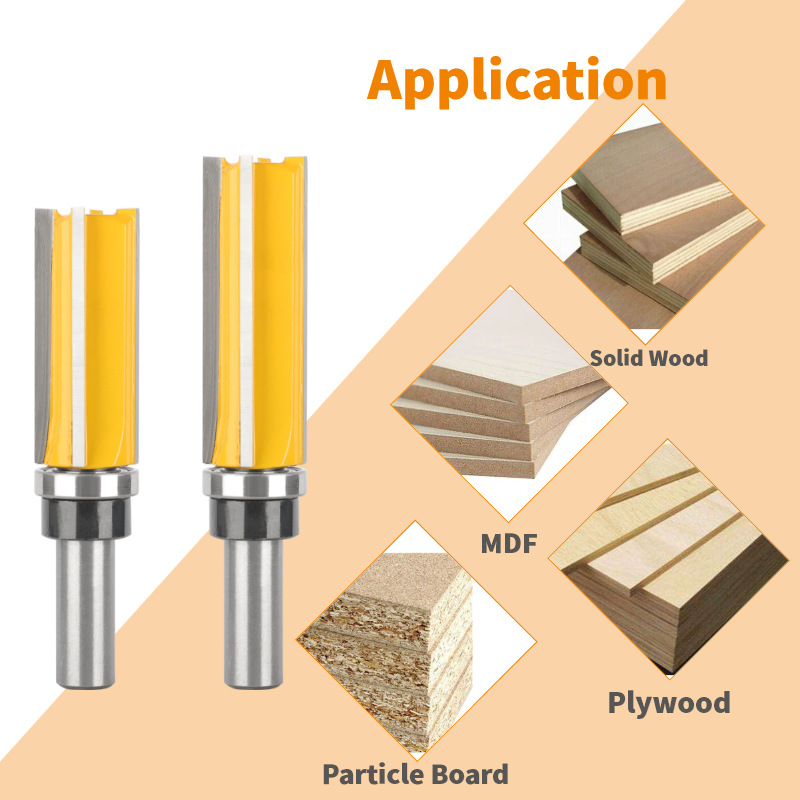
Rigidity and Cutting Smoothness of Large-Diameter Router Bits
Tool diameter is a key parameter affecting the rigidity and cutting effect of straight router bits and trimming router bits. Large-diameter woodworking router bits have thicker tool body and stronger overall structural rigidity. During high-speed cutting and feeding, the tool body is not easy to deform or vibrate, ensuring extremely smooth cutting strokes and flat workpiece sections.
Large-diameter trimming router bits and straight router bits are very suitable for large-area grooving, wide-edge trimming and thick board forming processing. Their excellent rigidity can resist cutting resistance generated by hardwood and high-density boards, effectively reducing tool wear and improving the service life of woodworking router bits. In batch industrial production, large-diameter tools are the first choice for stable and efficient processing.
Fine Processing Advantages of Small-Diameter Router Bits
Small-diameter woodworking router bits have unique irreplaceable advantages in fine processing scenarios. The slender tool body can penetrate narrow gaps and tiny grooves that large-diameter tools cannot reach, completing detailed structure processing that meets high-precision design requirements. Small-diameter trimming router bits leave smaller rounded corners after cutting, which is very convenient for subsequent manual finishing and right-angle correction.
In hardware mortise processing such as hinge grooves and lock holes, small-diameter straight router bits and trimming router bits are widely used. They can precisely control the processing range, avoid over-cutting of structural edges, and reserve reasonable finishing allowance for manual correction. For intricate wood patterns and tiny groove structures, small-diameter woodworking router bits are the core tools to ensure processing fineness.
Practical Matching Principles for Different Diameters
Workers should select tool diameters according to processing width and structural precision requirements. Structural grooving and edge finishing pursuing stability and efficiency adopt large-diameter woodworking router bits. Fine mortising, narrow groove processing and detailed shaping adopt small-diameter trimming router bits and straight router bits. Scientific diameter matching balances processing efficiency and precision, optimizing the overall processing effect of woodwork pieces.