Blog
Rational Selection of Solid Carbide Helical Wood Router Bits

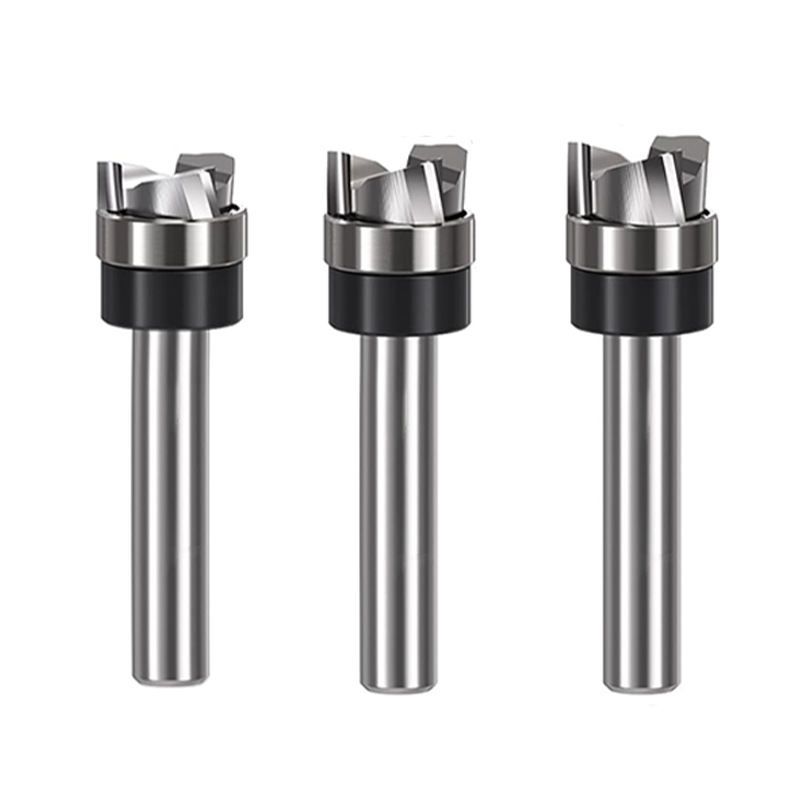
Solid carbide helical wood router bits serve as core cutting tools for high-efficiency, high-precision woodworking and furniture manufacturing. This paper sets out the practical application and scientific selection principles behind them. It covers several critical dimensions: rotation direction characteristics, mainstream machining methods, matched cutting parameters and common wear mechanisms. It also summarises targeted strategies that reduce tool wear, stabilise machining quality and extend service life in real production.
1. Common Types in High-Speed Woodworking
High-speed cutting is the most efficient processing method in modern woodworking, so it has spread widely through custom furniture manufacturing. Unlike traditional low-speed cutting, it optimises the whole workflow by raising spindle rotation speed. That change shortens the single-piece cycle time and improves both surface finish and dimensional consistency.
Stable high-speed woodworking also depends on professional, high-performance cutting tools. Ordinary standard tools cannot withstand continuous high-speed impact and friction, so they suffer edge chipping, severe wear and workpiece tearing. At present, three special tool types dominate high-speed woodworking: solid carbide helical end mills, clamp-on shank router bits and brazed polycrystalline diamond (PCD) head router bits. This article focuses on the second family, and it summarises how to select solid carbide helical wood router bits sensibly for industrial production.
2. Straight Flute vs Helical Flute Performance
Straight flute router bits have a simple structure and low manufacturing cost, yet their cutting performance has clear limits. During operation, the whole cutting edge contacts and separates from the workpiece synchronously. The contact area between the straight blade and the wood surface also stays relatively large throughout the cut. Repeated extrusion and friction then generate excessive cutting resistance, which accelerates blade wear during long continuous runs. For this reason, straight flute bits suit only low-hardness softwood and low-precision roughing.
Helical flute router bits, by contrast, deliver far better cutting quality and stability. Thanks to the spiral edge structure, the stress-bearing position on the blade keeps changing as the tool rotates. This dynamic stress dispersion reduces friction between the tool and the workpiece. Even when machining high-hardness hardwood or running high feed speeds, helical bits keep the cut smooth and clean. They also last longer and need replacing less often, which makes them better suited to batch and automated lines.
3. Left-Hand, Right-Hand and Compound Helical Bits
Right-hand helical router bits use right-hand cutting orientation with right spiral flutes. During cutting, this structure pushes wood chips upward along the spiral grooves, so chip removal stays smooth. That advantage makes right-hand bits a good fit for groove milling and other situations with poor natural chip evacuation.
However, right-hand bits also produce upward pulling force during cutting, which can displace lightweight workpieces. To avoid machining deviation, operators should increase clamping force or adopt segmented cutting. Right-hand bits support vertical downward feeding and drilling, yet direct vertical feeding creates instant impact on the cutting edge and leads to chipping. Oblique feeding is therefore the standard method in production, because it deepens the axial cut gradually and lets milling force rise steadily.
Left-hand helical router bits use right-hand cutting orientation but left spiral flutes, which discharge chips downward from the bottom of the workpiece. That downward pressure presses the workpiece onto the workbench, which assists fixing and improves stability. Work done with left-hand bits gives ultra-smooth finishes on the top surface, although minor burrs may appear on the bottom edge. In hidden groove milling, downward chip accumulation can cause blockage, so pre-trimming the workpiece beforehand improves edge accuracy. Left-hand bits are not suitable for vertical downward feeding, because that operation easily triggers breakage and chip jamming.
Compound helical router bits integrate upper and lower spiral cutting edges on one body. The upper and lower blades cut and compress the workpiece at the same time. This dual-action structure avoids top-surface burrs and bottom-edge chipping in a single pass, so it is widely used for high-precision finishing of veneered panels, density boards and custom furniture plates.
4. Selecting the Right Machining Method
Feeding and machining methods directly affect tool life and finishing quality. Sensible technique avoids common problems such as edge chipping, breakage and dimensional deviation. Four mainstream methods are summarised below.
- Avoid direct vertical downward feeding. This mode brings the cutting edge into instant full contact with the wood, which produces strong impact. Because solid carbide is brittle, the tool chips or breaks easily, so tool loss and safety risks both rise.
- Use edge feeding. The tool keeps a safe distance from the workpiece while moving down, then feeds laterally into contact. This two-stage method removes the impact risk of vertical feeding, and it suits edge trimming and shallow grooving on most panels.
- Follow a diagonal trajectory. Axial cutting depth increases gradually to the preset value, so milling force rises steadily without a peak impact. Load on the tool and spindle stays stable, which sharply reduces chipping. This is the most common feeding mode for conventional precision milling.
- Apply spiral feeding. The tool starts at the top of the workpiece and cuts downward on a continuous spiral path. Speed stays uniform and the cutting state stays stable, with no sudden changes or impact loads. This method suits high-speed machining of irregular profiles and 3D cavity work.
5. Scientific Selection of Cutting Parameters
Cutting parameters mainly include spindle rotation speed and workpiece feed speed. Together, they determine machining efficiency, surface finish and tool wear. Modern high-precision CNC woodworking equipment typically runs between 10,000 and 40,000 r/min. Within that range, a properly increased speed shears wood fibres more finely, which gives a smoother surface.
Excessive spindle speed, however, creates intense friction between the cutting edge and the wood. Continuous high-temperature friction accelerates carbide wear, blunts the edge quickly and can even burn the wood or deform the tool. Operators must therefore match the optimal speed to material hardness and processing type instead of chasing high numbers.
In real production, feed speed and feed volume depend on several objective factors. These include machine precision, spindle power, clamping stability, spindle running accuracy, workpiece fastening and material texture. Operators should fine-tune parameters on site to balance efficiency against tool durability.
6. Effective Methods to Reduce Tool Wear
Tool wear is the core factor limiting the service life of solid carbide helical wood router bits. Carbide tools mainly wear through brittle fracture and plastic deformation. Solid carbide is sintered by powder metallurgy, so it inevitably contains microscopic defects and internal inclusions. Under the alternating impact loads of continuous cutting, tools then wear gradually or fail suddenly. Standardised operation and scientific maintenance are therefore essential.
- Keep the tool holder clean. Remove all foreign impurities before installation, because clean clamping accessories ensure high-precision fitting. This reduces runout from clamping deviation and prevents eccentric edge wear.
- Choose high-rigidity tools. Bits with a larger blade or shank diameter resist cutting vibration better, so they wear more evenly under high load.
- Minimise overhang. Excessive overhang weakens rigidity, triggers vibration and accelerates both wear and chipping.
- Run in new tools at low speed. Set the initial running speed to 50% of the normal working speed. This polishes the tiny burrs on a new edge and stabilises the cutting state.
- Prefers climb milling in roughing. Climb milling produces small cutting resistance and stable tool stress, so it slows wear while raising efficiency.
- Monitor the machining state. If cutting vibration intensifies abnormally, reduce spindle speed and feed speed immediately to avoid overload damage.
7. Conclusion
Selecting and using solid carbide helical wood router bits sensibly is systems engineering. It spans tool type, rotation direction, machining method, cutting parameters and daily maintenance. Compared with traditional straight flute bits, helical bits win clearly on cutting stability, finish quality and service life. Meanwhile, left-hand, right-hand and compound helical bits each suit specific working conditions. By applying scientific feeding modes, matching optimised parameters and following standard anti-wear maintenance, woodworking enterprises can cut replacement costs, stabilise product quality and raise overall efficiency.
Where to Source Reliable Router Bits
Specification sheets tell only half the story, because two cutters with identical dimensions can behave very differently. Carbide grade, grinding accuracy and balance quality decide how a bit survives at 20,000 r/min. Buyers should ask suppliers for the carbide grade, the balance grade and the runout tolerance before comparing prices.
That is especially true for helical geometry, where flute grinding is harder to control than on straight bits. Consistent concentricity keeps all flutes cutting equally, and equal cutting keeps wear even. When you evaluate a new supplier, run one bit through a full production shift and check the edge afterwards. You will learn more from that single test than from any catalogue.
For production lines that run veneered panels and hardwood daily, our solid carbide router bits range covers the common diameters and shank options. You can also review our CNC woodworking router bits catalogue when planning a full tooling changeover.
FAQ
Are helical router bits always better than straight flute bits?
For hardwood, high feed speeds and batch production, yes. For soft, low-precision roughing, straight flute bits still cost less and work acceptably.
Which rotation direction should I choose?
Pick right-hand bits for good chip evacuation in groove milling, left-hand bits for clean top faces, and compound bits when both faces must stay clean.
Why does my carbide bit chip during vertical feeding?
Vertical feeding loads the whole edge at once. Solid carbide is brittle, so that impact breaks the edge. Switch to oblique, edge or spiral feeding instead.
How much overhang is acceptable?
Keep overhang as short as the job allows. Every extra millimetre weakens rigidity and increases vibration, which shortens tool life.