Blog
Types of Router Bits: 12 Profiles Explained in Full

The shelf offers dozens of shapes, yet most work comes from a small group. Therefore, this tour of the main types of router bits groups them by job. Each entry covers one line of use and a typical size.
First we look at how to read a profile. Then we list twelve types. Finally, we work backwards from a shape you want to make.
How to Read a Profile
Every cutter is described by three numbers. They are the shank size, the cutting diameter and the cutting height.
Beyond size, the profile is the silhouette the edge leaves in wood. Because that silhouette decides the joint or the trim, the shape matters most. In short, the types of router bits differ by the form of the edge, not only by the number.
Meanwhile, the bearing is the guide that follows an edge. Therefore, a bearing changes how you use a cutter, not what it cuts.
The Twelve Types of Router Bits at a Glance
Use this list as a quick reference when you order.
- Straight bit: cuts grooves, dadoes and flat bottomed rebates.
- Spiral bit: shears fibres for cleaner grooves in hard wood.
- Roundover bit: puts a convex curve on an edge.
- Cove bit: puts a concave curve on an edge or a moulding.
- Chamfer and bevel bit: cuts a flat face at a set angle.
- V-groove bit: carves lines, lettering and panel decoration.
- Round nose bit: cuts a half round groove or a core box.
- Dovetail bit: cuts the angled tails of a locking joint.
- Box joint bit: cuts square interlocking fingers.
- Flush trim bit: copies a shape from a template with a bearing.
- Rebate and rabbeting bit: cuts a stepped shoulder.
- Slot and T-slot bit: cuts a hidden channel for hardware.
In practice, a few of these cover most beginner projects. Therefore, buy straight, roundover, chamfer and trim first.
Straight Bits: The Workhorses
The straight bit is the most useful cutter in the drawer. Because the edges are parallel, it cuts a clean sided groove. Among all the types of router bits, this one earns its place first.
Common sizes run from 1/8 inch to 3/4 inch in diameter. Meanwhile, the cutting height decides how deep each pass can go.
For deep grooves, a spiral straight bit works better. In fact, it clears chips faster and leaves a smoother wall.
Round Nose Bits: Curves and Grooves
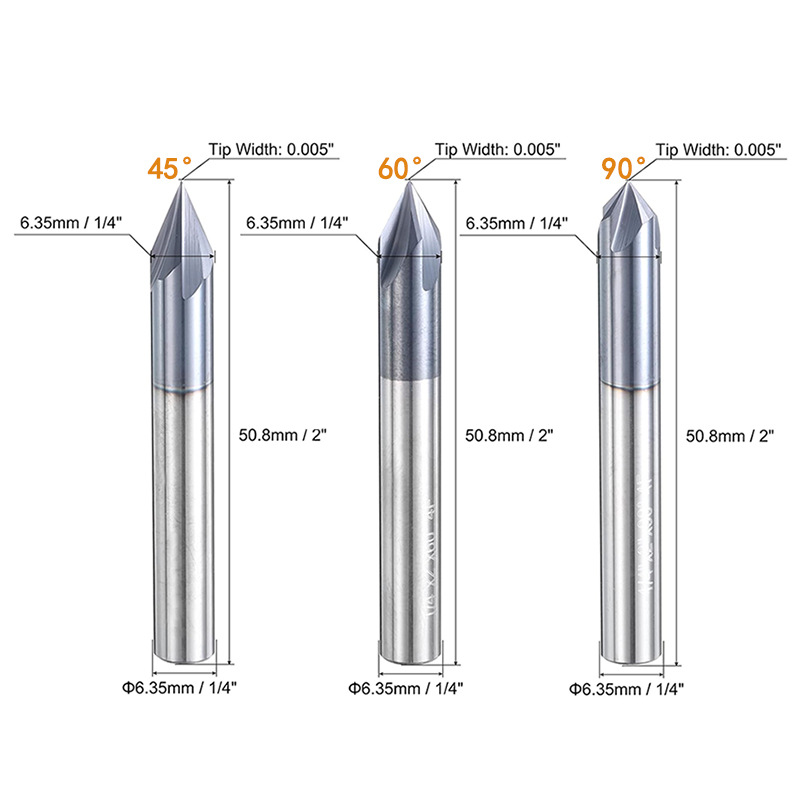
A round nose bit cuts a half round channel, which suits cable runs and decorative lines. Because the tip is rounded, the groove has no sharp corners. These types of router bits suit channels more than edges, so keep them for slots and flutes.
Core box bits are the deeper version of the same idea. Therefore, they suit flutes, drainage channels and carved details.
However, a round nose bit removes a lot of material. As a result, take two or three passes instead of one.
Dado and Jointer Bits: Strong Joints
Dado and jointer cutters build joints rather than decoration. In contrast to a rounded profile, they cut straight walls that glue well.
A dado stack cuts a wide flat channel on a table saw. Meanwhile, a router version does the same job on site. So the choice depends on where the work happens.
In addition, box joint and dovetail bits cut interlocking fingers that lock without glue.
Because these joints carry load, the fit must be tight. Therefore, cut a test piece from the same stock before the real part.
Bits That Follow a Guide
Bearing guided types of router bits copy an existing shape onto a new part. Because the bearing rolls along a template, the cut repeats exactly. As a result, ten identical parts come from one pattern.
Meanwhile, a slot bit cuts a hidden channel without a guide. Therefore, it relies on the fence and on steady feed pressure instead.
Working Backwards From the Shape
The fastest way to choose is to describe the finished look in words.
- A flat bottomed channel points to a straight or spiral bit.
- A soft rounded edge points to a roundover bit.
- A flat angled edge points to a chamfer bit.
- A carved line points to a V-groove bit.
- An interlocking corner points to a dovetail or box joint bit.
- A copy of an existing shape points to a bearing guided trim bit.
Therefore, describe the result first. Then the correct cutter follows almost by itself.
FAQ
How many types should a beginner own? Four or five. Straight, roundover, chamfer and trim cover most tasks.
Are the types of router bits the same for CNC? Mostly, yes. However, CNC tooling often uses smaller diameters and longer shanks.
Which type is most versatile? The straight bit, because it cuts grooves, rebates and flat bottoms.
Profiles look endless, yet they group into a few families. Decide the shape, pick the family, and match the shank. Then browse a reliable router bits range, or check a wider router bit collection to fill the gaps.