Blog
Router Bits for Furniture: Cabinet Doors and Frames


Furniture work asks for a small number of profiles, used very well. Therefore, choosing router bits for furniture is easier than the shelf suggests. Most pieces need edges, panels and joints, and that is all.
This guide groups the work by component. First we cover cabinet doors. Then tabletops, legs and frames. Finally, a shopping list follows each project.
Start With the Project, Not the Tool
A shopping list built from a project always fits better. Because you know the parts, you know the profiles. In short, router bits for furniture follow the components you plan to build.
Therefore, draw the piece and mark the edges first. Meanwhile, note where a profile shows and where it is hidden.
In addition, decide the joint type at the same time. Because joints and edges use different cutters, the two decisions belong together.
Router Bits for Furniture: Cabinet Doors
A raised panel door uses a matched pair of cutters, and both must match the panel thickness.
- A stile and rail cutter shapes the frame members.
- A raised panel cutter shapes the centre panel.
- A rebate cutter cuts the groove that holds the panel.
- A roundover cutter softens the outside edge of the frame.
- A flush trim cutter squares up the assembled door.
Therefore, buy the stile and rail set as a matched pair. Because the profiles must meet exactly, mixing brands usually fails.
Meanwhile, check the panel thickness on the cutter box. A set made for 3/4 inch stock will not suit a thin panel.
Tabletops and Legs
Large flat parts and legs need simple, robust profiles. These router bits for furniture earn their place on almost every build.
- A roundover cutter eases a tabletop edge on both faces.
- A chamfer cutter gives a crisper, more formal line.
- A straight bit cuts the slot for a tabletop fastener.
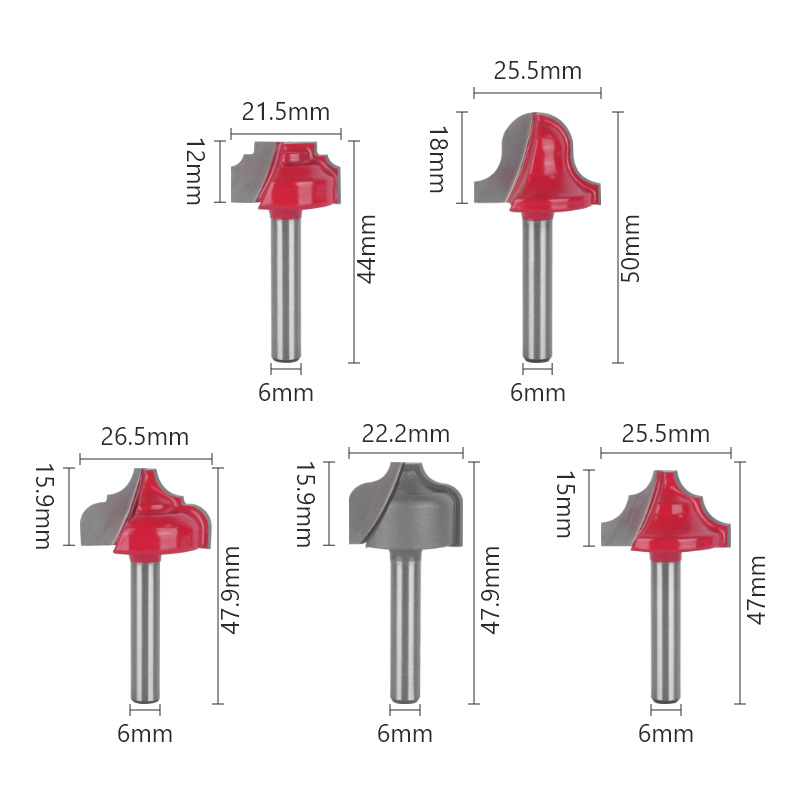
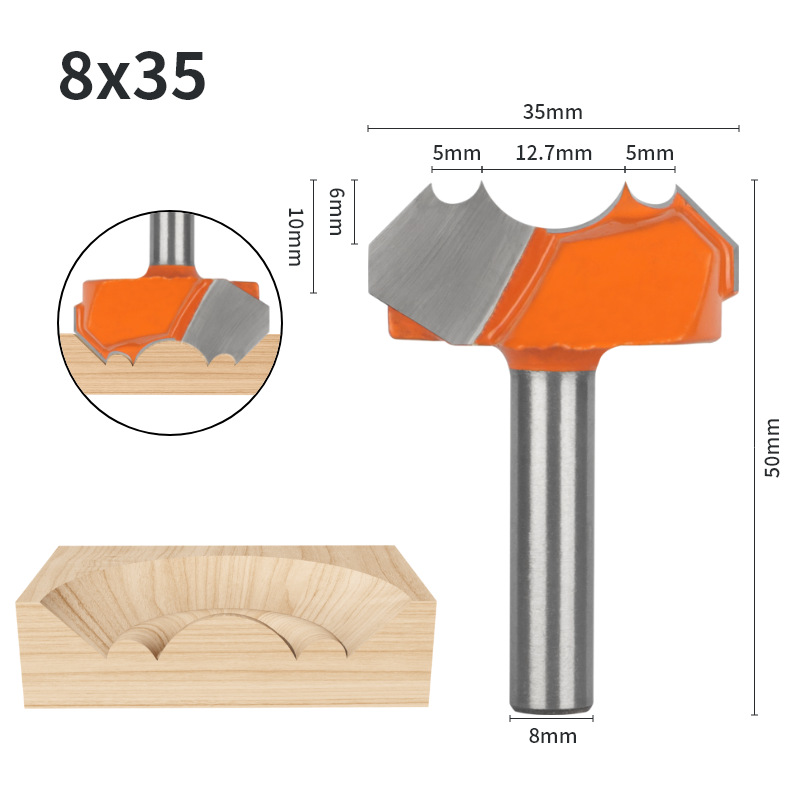
- A round nose cutter shapes a decorative leg detail.
- A bearing guided trim bit cleans a curved edge on a shaped top.
Because a tabletop takes knocks, a generous roundover lasts better than a fine chamfer. In practice, a 1/2 inch radius suits most dining tables.
In addition, cut the profile before the final sanding pass. Because the cutter leaves a clean face, you sand less afterwards.
Frames, Panels and Edge Profiles
Frame and panel work converts a plain board into a piece of furniture. Meanwhile, router bits for furniture that cut joints save a second machine setup.
- A cove or ogee cutter decorates a frame face.
- A rebate cutter creates the step that holds a back panel.
- A slot cutter cuts a groove for a floating panel.
- A finger joint or box joint bit builds a small drawer.
- A dovetail bit forms the classic drawer corner.
Therefore, plan the groove before you assemble the frame. Because a panel must float, the groove needs a little clearance.
Meanwhile, keep a test piece for each profile. Because a sample shows the shadow line, it guides the final height setting.
A Shopping List by Project
Use these short lists when you order for a specific piece.
- A cabinet door: stile and rail set, panel cutter, roundover bit.
- A dining table: roundover or chamfer bit, straight bit, trim bit.
- A bookcase: rebate bit, slot cutter, roundover bit.
- A small drawer: box joint or dovetail bit, straight bit, roundover bit.
- A picture frame: ogee or cove bit, rebate bit, slot cutter.
Because each list is short, the budget stays under control. In addition, most of these cutters serve more than one project. Therefore, router bits for furniture grow with your skill rather than with impulse.
Sanding and Finish Considerations
The cutter decides how much sanding the piece will need. Therefore, buy quality for the profiles that show.
A clean profile leaves very little work for the sander. Meanwhile, a dull cutter compresses the fibres and raises them again when the finish goes on.
In addition, sand across the profile only when you must. Because a rounded edge loses its crisp line quickly, work lightly along the grain.
Finally, test the finish on an offcut. Because different species take stain unevenly, a sample prevents a costly surprise.
Working Backwards From One Piece
Pick a piece you plan to build, then list its visible edges.
A floating top table needs two cutters: one for the edge and one for the fastener slot. Meanwhile, a cabinet door needs three or four.
As a result, the list grows with the work rather than ahead of it. That approach keeps a tool drawer useful instead of crowded.
When you are ready to order, compare profiles and shank sizes in a wider router bits range before you commit.

FAQ
Which router bits for furniture should I buy first? A roundover and a straight bit cover the most common jobs.
Can I cut raised panels on a small router? Yes, with a small panel cutter and a 1/2 inch shank for stability.
Do cabinet door sets fit any router? No. Check the shank and the panel thickness before ordering.
Let the piece decide the tooling, and the list stays short. Set each profile on a test piece, then cut the real parts. After that, add a dependable router bit collection, and every build will go faster.