


Blog
Router Bit Flutes and Helix Angle: A Woodworker’s Guide

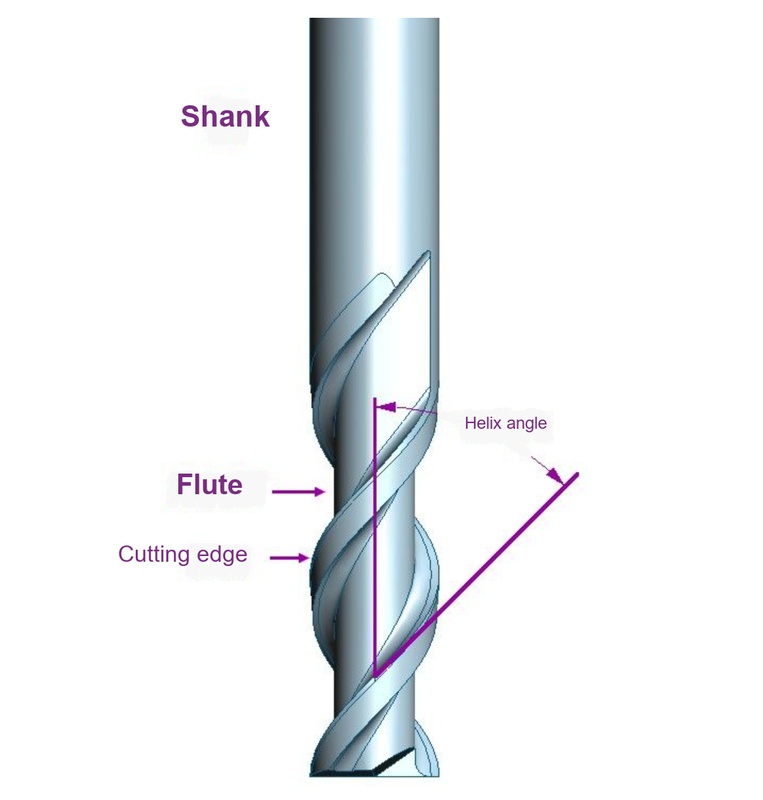
Understanding router bit flutes and bit geometry turns guesswork into clean, repeatable cuts. A wood router bit is a rotating cutter with one or more teeth. The bit spins while the workpiece stays still, and each tooth takes a small bite in turn. That simple idea explains why flute count, helix angle, and shank size matter so much. Therefore, this guide covers the anatomy, the cutting terms, and the two milling directions.
What a Wood Router Bit Does
A router bit is a multi-edge cutter that comes in many shapes and sizes. The body turns at high speed while the material feeds past it. Because the teeth cut one after another, the load arrives in pulses rather than as a steady push. As a result, balance and rigidity decide the finish. A well-made bit removes waste quickly and leaves a surface that needs little sanding.
Router Bit Flutes and Cutting Edges
router bit flutes are the deep spiral channels cut into the body. The sharp edges along those channels are the cutting edges, and each one shears the wood. In everyday talk, the two words are used interchangeably. A bit may carry one edge or many, and two, three, and four are the most common counts. Generally, more teeth remove material faster. Consequently, a four-flute bit can feed about twice as fast as a two-flute bit at the same cut depth.
Helix Angle: Why Spiral Beats Straight
The flutes almost always run in a spiral. A straight flute would strike the wood with its full length at once, and that sudden impact causes vibration. Vibration, in turn, spoils accuracy and surface quality. By angling the router bit flutes, each edge enters the material gradually. As a result, the cut runs smoother and quieter. Finishing bits often use a higher helix angle to shear the grain even more cleanly.
The Shank: How the Bit Is Held
The shank is the plain cylindrical part that the collet grips. It locates the bit and carries the drive torque. Some shanks are fully round and held by friction alone. Others carry a flattened face, where a set screw presses in to stop slipping. The shank diameter may differ from the cutting diameter, so a standard holder can still drive a wide cutter.
Common Wood Router Bit Types
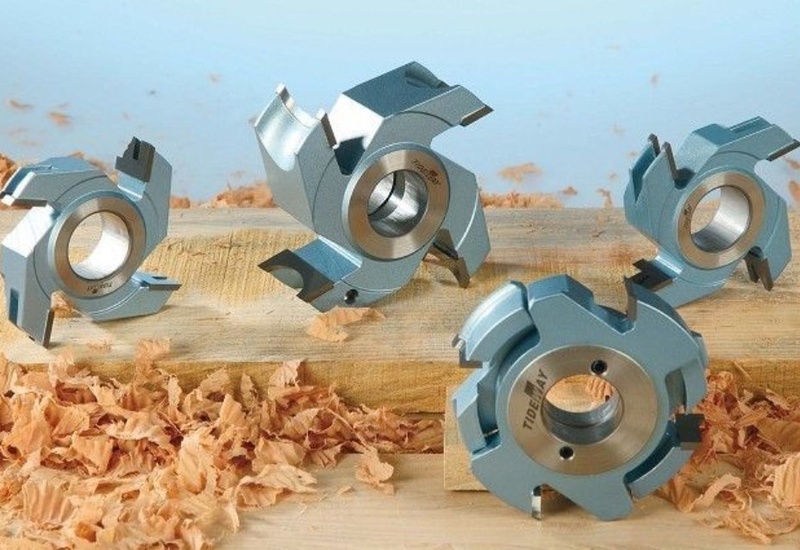
Each profile solves one job. Straight bits cut grooves and dados. Bottom-cleaning bits flatten the floor of a groove. Trimming bits true up an edge. Round-over bits soften a corner. V-groove and chamfer bits bevel an edge or fold a seam. Dovetail and slot cutters build joinery and side grooves. Because the range is huge, list your cuts before you buy.
Cutting Parameters That Control the Cut
Five values describe every cut. Surface speed (Vc) is how fast each edge travels through the wood. It is not the same as feed rate. Spindle speed (S) is the turning rate in revolutions per minute. Cutter diameter (D) is the width of the cutting circle. Tooth count (z) is the number of edges. Feed per tooth (Fz) is the distance the material advances during one tooth pass. In practice, you set spindle speed, feed rate, and depth of cut, then inspect the chip. Fine dust means the load is too light, while a heavy chip means you are pushing too hard.
Climb Milling vs Conventional Milling
A router can cut in two directions, and the choice changes everything.
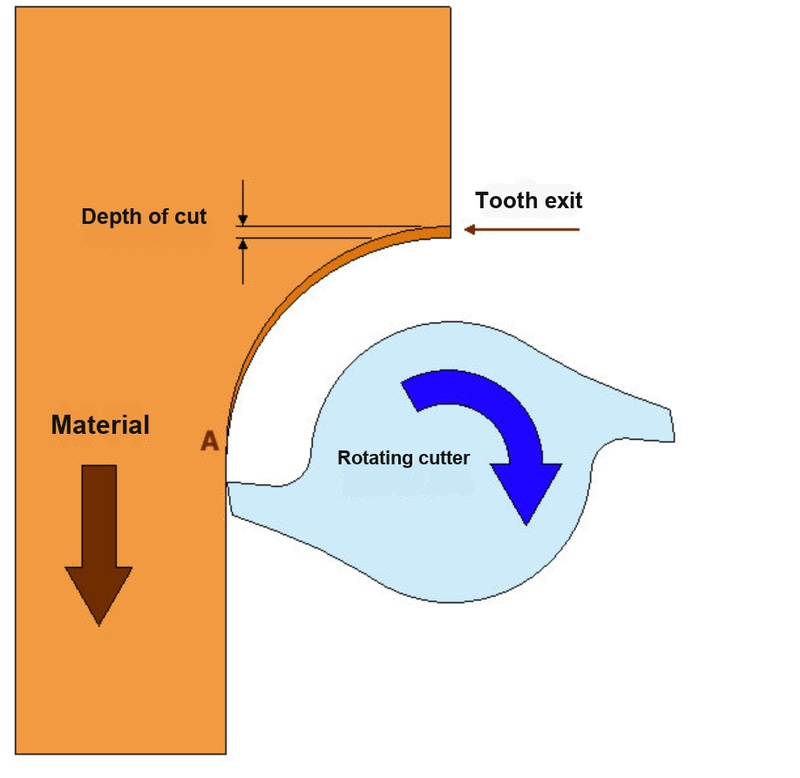
Conventional milling, also called up milling. The chip starts at zero thickness and grows to full depth. So the edge skids across the surface before it bites. That rubbing deforms the wood at the entry point and dulls the edge sooner.
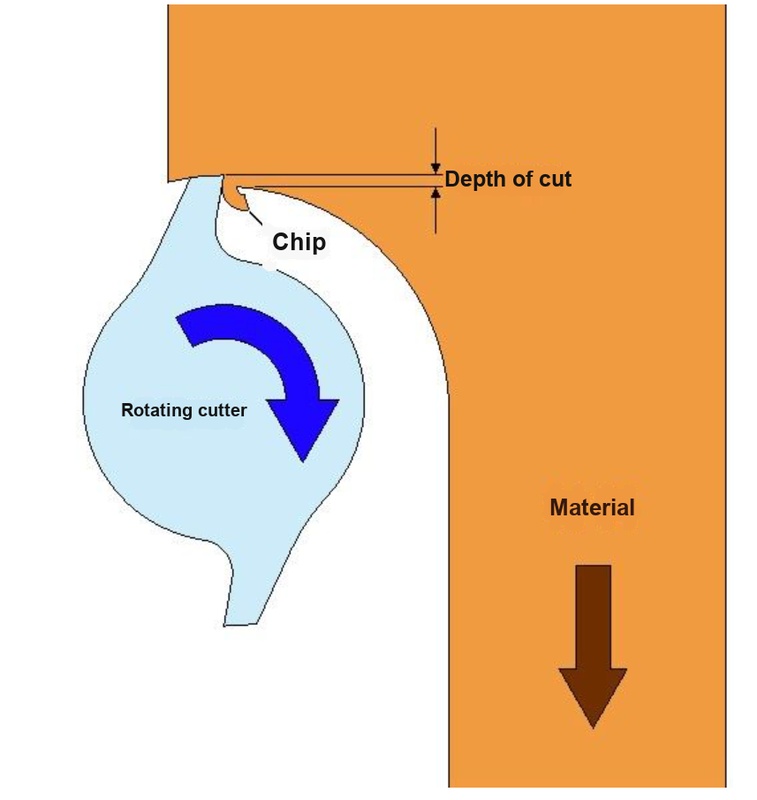
Climb milling, also called down milling. Here the edge engages at full width, and the chip thins to zero. The chip forms behind the cutter, so it clears easily. Because the edge does not rub, tool life improves. However, climb milling loads the machine harder, and it is not advised on older routers with loose slides.
Choosing a Bit by Grade and Material
Value matters as much as features. Bits fall into three broad grades: economy, better, and premium. Some economy bits hide behind paint and a clear shell, so judge the edge rather than the box. A bright, finely ground edge signals the better grade. Hard, dense stock and abrasive boards such as acrylic or solid surface need the top grade. Soft, low-density panels and nail-prone reclaimed timber suit a cheaper cutter, since damage is likely anyway. In short, match the grade to the material and to how often you cut.
Quick Setup Checklist
Before every cut, run through the basics. First, match the bit type to the job. Second, check the router bit flutes and helix for the finish you want. Third, seat the shank fully and tighten the collet. Fourth, set spindle speed from the cutter diameter. Finally, pick the milling direction that suits your machine. Pair these steps with quality wood router bits and a steady feed, and results improve at once. For the full range, browse our complete router bit range.
Frequently Asked Questions
How many flutes should a bit have? Two or three router bit flutes balance chip clearance and speed for most woodworking. Four or more suit fast finishing passes in hard material.
Is climb milling always better? No. It gives a cleaner cut and longer tool life, but it demands a rigid machine and firm control.
What does helix angle do? A steeper helix shears the wood more gently and lifts chips away, which improves the finish.











