Hidden Dangers of Blind Reverse Feeding in Router Processing
When using trimming router bits and straight router bits for template profiling on router tables, wood grain direction always restricts feeding methods. Many novice woodworkers choose to reverse the feeding direction to avoid reverse grain tearing, which leads to serious safety hazards and processing defects. Different from handheld flexible operation, desktop table routing has fixed tool rotation directions, and blind reverse feeding will form dangerous climb cutting states.
In reverse feeding operation, the cutting edges of woodworking router bits will violently bite the wood fiber instead of shearing it smoothly. This not only causes large-area edge chipping, fiber tearing and uneven surface finish, but also generates huge reverse resistance, which may push the workpiece out of control and even cause tool collision and tool edge damage. For high-precision trimming router bits with precision bearings, irregular impact force will also cause bearing displacement and positioning deviation.
Safe Processing Solution: Workpiece Flipping + Tool Matching
The correct industrial processing method to avoid reverse grain tearout is not reverse feeding, but reasonable workpiece flipping and professional woodworking router bit replacement. When the grain direction leads to unavoidable reverse cutting, flip the workpiece to place the template on the upper surface of the board, so that the tool cutting direction matches the wood grain shear direction.
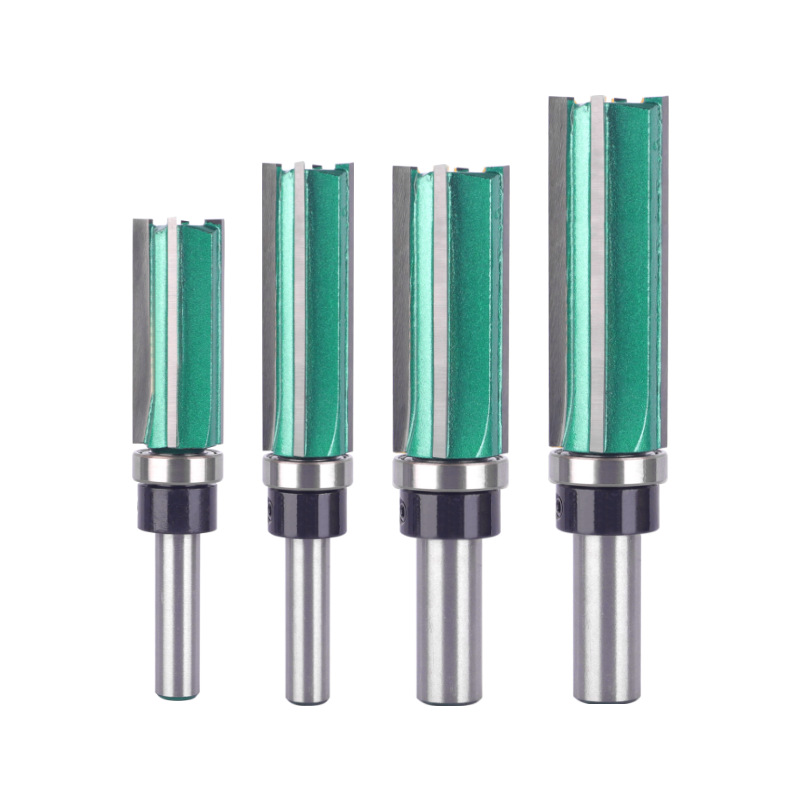
After flipping the workpiece, it is necessary to replace the bottom-bearing profiling router bit with a top-bearing flush trimming router bit. The bearing structure of the new trimming router bits can closely fit the upper template surface for accurate guidance, and the cutting edge completes downward profiling milling along the template contour. This operation maintains the correct forward feeding direction of the equipment, eliminates climb cutting risks, and ensures smooth cutting of wood fibers without tearing or burrs.
Process Optimization for Batch Table Routing
Standardizing the cooperation of workpiece flipping and trimming woodworking router bits can completely solve the grain restriction problem in table template milling. Straight router bits are used for fixed-size grooving and rough processing, while different bearing-position trimming router bits are matched according to template placement direction. This set of processes ensures processing safety, improves surface finish, and is widely applicable to batch furniture profiling and special-shaped wood processing.