Professional standards for shank type, surface coating and carbide grade matching
High-precision wood routing relies on reasonable matching of shank type, tool coating and carbide grade. These three hidden factors determine tool stability, wear resistance and service life, solving common problems like tool vibration, material adhesion and rapid dulling.
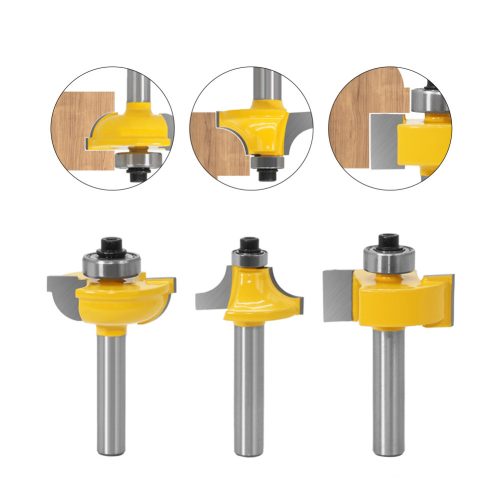
Straight shanks feature consistent shank and flute diameter for simple clamping, suitable for small-diameter bits. Reduced shanks reduce runout for precise machining. The core rule is larger shank diameter for higher rigidity; shank extension should not exceed four times the shank diameter to avoid vibration.
Four mainstream coatings adapt to different materials. Uncoated bits work well for softwood and MDF. TiAlN coatings boost wear resistance 3–5 times for hardwood and high-speed CNC machining. CrN coatings prevent resin adhesion for high-resin wood. DLC diamond coatings deliver extreme hardness for high-volume dense board finishing.
Carbide grades follow clear material-matching rules. K30 with high toughness suits softwood processing. K20 with balanced hardness and wear resistance is ideal for hardwood. K10 serves ultra-precision finishing, while PCD diamond bits are designed for mass industrial production with ultra-long service life.