Complete application guide for grooving, trimming, shaping, tenoning and profiling bits
Professional woodworking router bits are categorized by functional usage into five core types, covering all common furniture and wood processing procedures. Matching the correct bit to specific tasks eliminates chipping, tearing and inefficient machining, improving finished product quality significantly.
Grooving bits include straight bits for standard straight slots, high-angle spiral bits for deep grooving, and dovetail bits for one-pass dovetail slot forming. Shank diameter above 8mm ensures rigidity, and cutting depth should not exceed twice the flute length for stable performance. Trimming bits adopt bearing-guided design for effortless edge finishing; single-flute versions offer better chip removal while double-flute ones deliver balanced rotation.
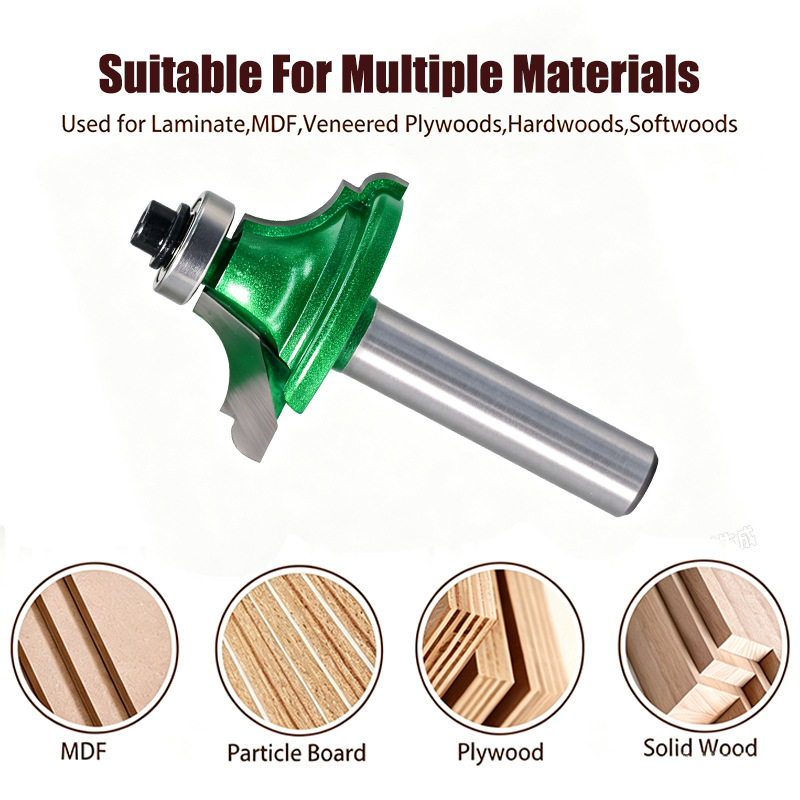
Shaping bits cover rounding, chamfering, door panel molding and finger joint cutters, requiring high-precision solid carbide blades for smooth curved profiles. Tenoning bits include right-angle tenon and finger joint cutters, designed with optimized blade angles to prevent fiber tearing and produce neat tenon surfaces.
Profiling and engraving bits feature sharp large rake angles to adapt to uneven cutting loads on irregular workpieces like chair legs and cabinet feet. Reasonable application classification ensures every woodworking procedure achieves efficient and high-quality cutting results.