Cost and performance comparison of three carbide router bit structures for woodworking
Carbide wood router bits are divided into three structural types: solid carbide, welded carbide, and indexable (assembled) bits. The bit body structure directly determines machining accuracy, service life and overall production cost, making it a critical selection factor for woodworkers and factory purchasers.
Solid carbide router bits are fully made of tungsten carbide with extreme precision and sharp edges. They excel in small-diameter grooving and high-precision edge trimming, perfectly suited for CNC engraving fine machining. These bits can process 200–400 meters continuously on hardwood. The main drawbacks are high cost and brittleness, prone to chipping with improper operation.
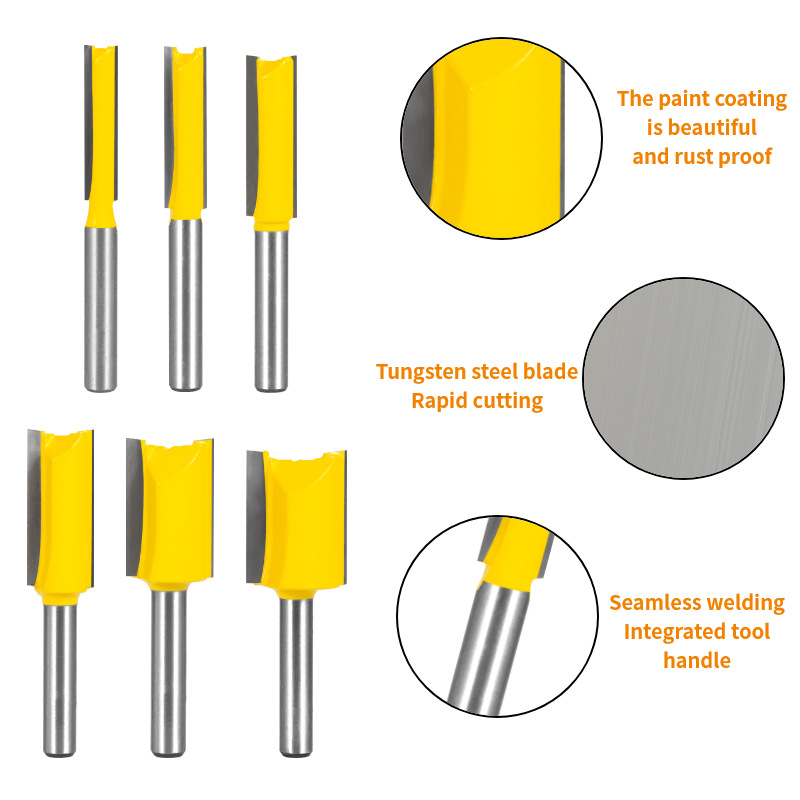
Welded carbide bits combine tough steel bodies and wear-resistant welded carbide blades. They are the mainstream option for large-diameter forming and rough machining, featuring low cost and strong rigidity. Users must verify welding quality with a shear strength above 150 MPa to avoid blade falling off during operation.
Indexable router bits with replaceable blades are the optimal solution for industrial mass production. The reusable bit body reduces tool replacement costs, and blade flipping or replacement can be done without disassembling the tool. This structure maintains consistent machining accuracy after adjustment, greatly improving production efficiency for automated woodworking lines.