Differences, advantages and best applications of three core router bit edge designs
Choosing the right carbide router bit edge shape is the first step to clean wood cuts and stable processing. Three mainstream edge designs dominate woodworking: straight, spiral, and shaped cutters, each engineered for specific machining scenarios. Many woodworking defects like burning, chipping and poor finish stem from mismatched edge geometry.
Straight flute router bits feature parallel cutting edges, delivering crisp, flat cuts ideal for straight grooving and edge trimming. They provide even cutting force and minimal vibration for shallow slots and linear wood profiles. The only downside is limited chip evacuation, which easily causes clogging in deep grooving tasks.
Spiral router bits adopt helical flutes that peel wood layer by layer instead of one-time cutting. This design ensures smooth chip removal, dispersed cutting pressure and lower operating noise, reducing sound levels by 15–20 dB compared to straight bits. They are the top choice for deep grooving and heavy-duty cutting. Segmented spiral bits are widely used as a cost-effective alternative to integral spiral cutters.
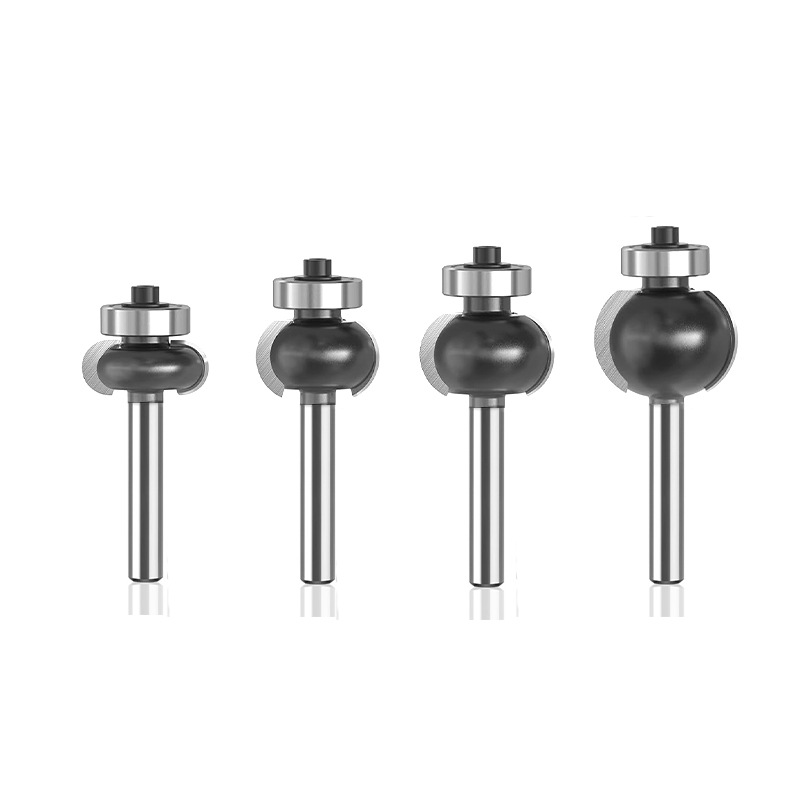
Shaped cutters with custom profiled edges handle all curved and irregular wood profiles, including rounding, chamfering, door panel lines and handrail shaping. For precise decorative molding, solid carbide 2–3 flute shaped bits with matched coatings guarantee accurate, consistent forming results for furniture production.