


Blog
Straight Router Bits vs Spiral: Grooving & Trimming Guide

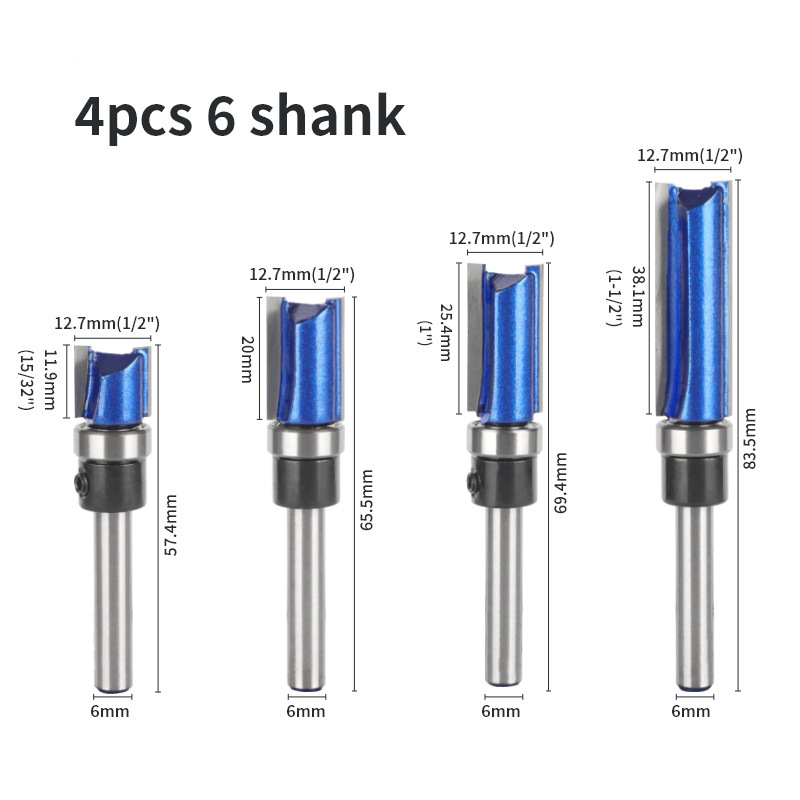
Straight router bits are the everyday workhorses of edge forming, grooving, and trimming. Because they cut on a flat, cylindrical path, they suit dados, slots, and template work better than most shaped profilers. When you understand how flute count, bearing guides, and spiral geometry change the cut, you choose faster and waste less stock. This guide covers the basics so a beginner can pick the right cutter with confidence.
What Makes a Straight Bit Different
A straight router bit cuts with flutes that run parallel to the shank. Edge cutting sends the cutter across the stock perpendicular to the table, while plunge-rated designs also cut downward into the face. Most shanks are 1/4 inch for trim routers or 1/2 inch for full-size machines. Cutting diameters span from 1/16 inch up to 1 1/2 inch. Cutting lengths usually fall between 1/2 inch and 2 inches, which sets how deep a single pass can go. On a router table the bit spins in a fixed position. In a handheld trimmer it moves with you, so grip and control matter more. For this reason, match the shank to the collet and never let the bit extend farther than the job demands.
Flute Count and What It Changes
Double-flute bits are the most common choice. They leave a very smooth wall in grooves, dados, rabbets, mortises, and tenons. Single-flute bits trade finish for the largest chip space. That makes them ideal for repetitive, high-feed production where heat and packing slow you down. However, a small single-flute bit needs a controlled feed rate; too fast and it chatters or snaps. Triple-flute bits deliver the finest surface yet demand a slower feed. In addition, shear angles matter: a downward shear reduces tear-out and fuzz on irregular grain, so the exit edge stays clean. For this reason, many shops keep at least one straight router bits style in each flute count on hand. The right count is a balance between finish quality and how aggressively you can feed the wood.
Typical Cuts You Can Make
A straight bit is the most versatile profile in the box. Use it for simple grooves and dado shelves, for rabbets that seat a cabinet back, and for mortises that receive a tenon. With a fence or jig it also forms tongue-and-groove flooring and cleans the edge of a board. Because the cut is square and predictable, it is the safe default when a shaped bit would be overkill. Start shallow, then deepen in passes, because several light cuts beat one heavy pass that strains the motor.
Bearing-Guided Flush Trim Bits
Special-function straight router bits add a bearing to follow an edge. A bottom-bearing trimmer keeps the cutter aligned with the bearing at the foot, perfect for laminate and veneer. A top-bearing version sits above the cut, so it handles counterbores, cutouts, and template copying where you plunge in. Double-bearing trimmers carry bearings at both ends, letting you flip the workpiece and reverse the cut to suit tricky grain. Each style simply moves the guide to where the reference surface lives, which keeps the result true to the template. For curved work, a bearing bit is the only safe way to copy a pattern by hand.
Spiral Router Bits: The Slicing Alternative
A spiral bit wraps the edge in a double helix so the cut feels like slicing rather than scraping. spiral router bits come in three grinds. Up-cut pulls chips up and leaves a clean bottom but a rougher top. Down-cut does the reverse, cleaning the top while the bottom tears. Compression bits evacuate both ways, keeping both faces crisp. They are usually solid carbide and cost more, with diameters from 1/8 inch to 3/4 inch. Choose a spiral when the grain tears under a straight bit, because the shearing action calms wild fibers. On a CNC the spiral is often the default, yet for quick hand-fed grooves the straight bit still wins on price.
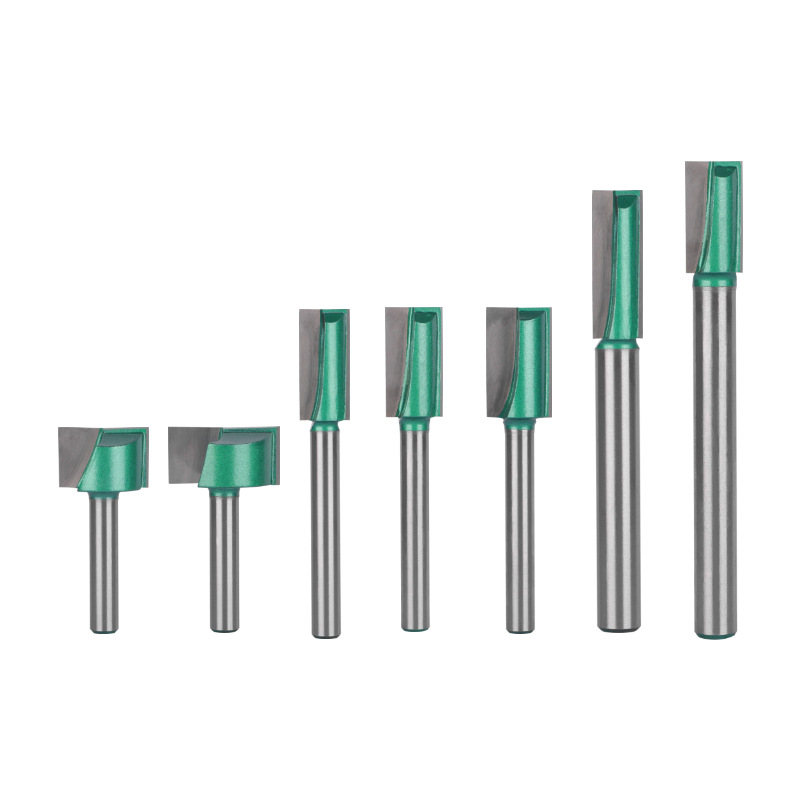
Carbide, Brazing, and Edge Grinding
The cutting edge is almost always tungsten carbide, and fine-grain carbide stays sharp far longer than coarse stock. The steel body is heat-treated for strength, then joined by automated brazing. Sandwich silver-copper-silver joints give a tough, shock-absorbing bond. Grinding is also automated now, which removes hand error, yet wheel grit and program quality still decide the final edge. Good straight router bits therefore pair hard carbide with a clean, well-supported joint. After use, clear the resin and check the edge, because a clean bit runs cooler and lasts longer.
Matching the Bit to the Task
Start with the cut you make most. Reach for a double-flute straight bit on clean grooves and dados. Switch to a single flute for fast production passes, and keep a spiral bit handy when grain tears out. Use a bearing-guided trimmer for templates and laminates. Finally, buy from a maker that controls carbide grain and brazing, because the bit you trust decides both speed and finish. Straight router bits reward a little planning. Choose the flute count, guide, and grind that fit the wood, and every groove, slot, and trimmed edge comes out cleaner with less effort.
