Why shank diameter and collet size determine wood router processing capacity
Motor power and collet clamping specification are two key indicators to classify wood router grades. Many processing failures such as tool vibration, tool breakage and unsmooth cutting are caused by mismatched collet and cutter shank, rather than tool quality problems.
Wood router collets have universal standard sizes, including 1/4 inch, 1/2 inch, 6mm, 8mm, 3/8 inch and 12mm. Light-duty household trimmers below 1000W only support small shank tools like 1/4 inch and 8mm, limited to light trimming and shallow grooving. Industrial heavy-duty routers above 1800W are compatible with large collets of 1/2 inch, 3/8 inch and 12mm for heavy stock removal and thick wood processing.
The matching rule is unidirectional and non-replaceable. Industrial high-power routers can install small collets to clamp thin-shank cutters for fine engraving. However, light small-power routers cannot upgrade large collets to fit thick-shank tools, due to insufficient spindle rigidity and motor torque.
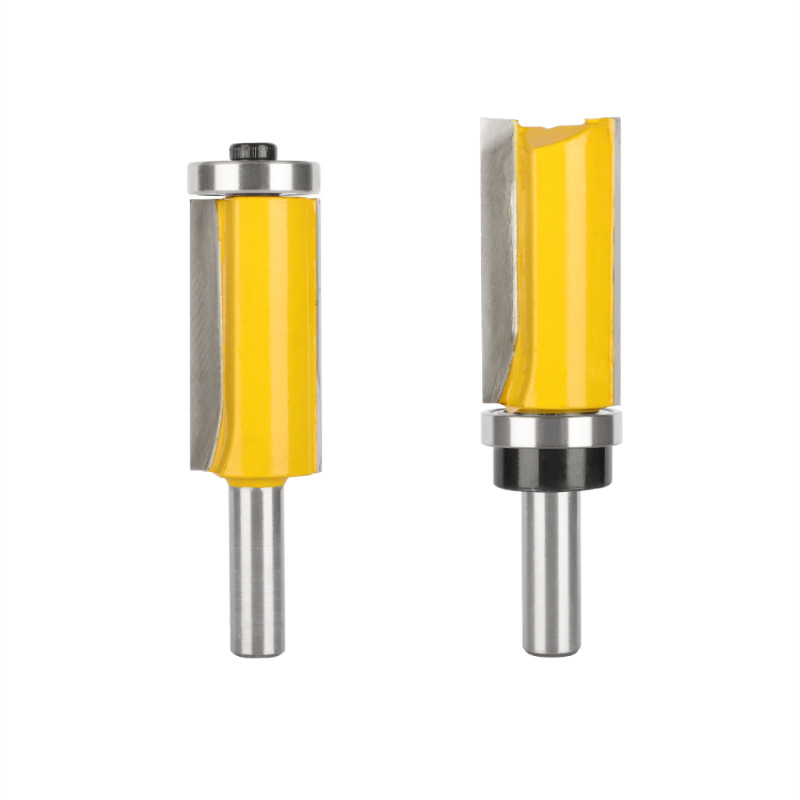
Shank diameter directly affects tool rigidity. Matching large-diameter milling cutters with thin shanks will cause severe trembling and bending during cutting, resulting in broken tools and chipped workpieces. Correct collet and shank matching is the basic guarantee for stable and high-precision wood processing.