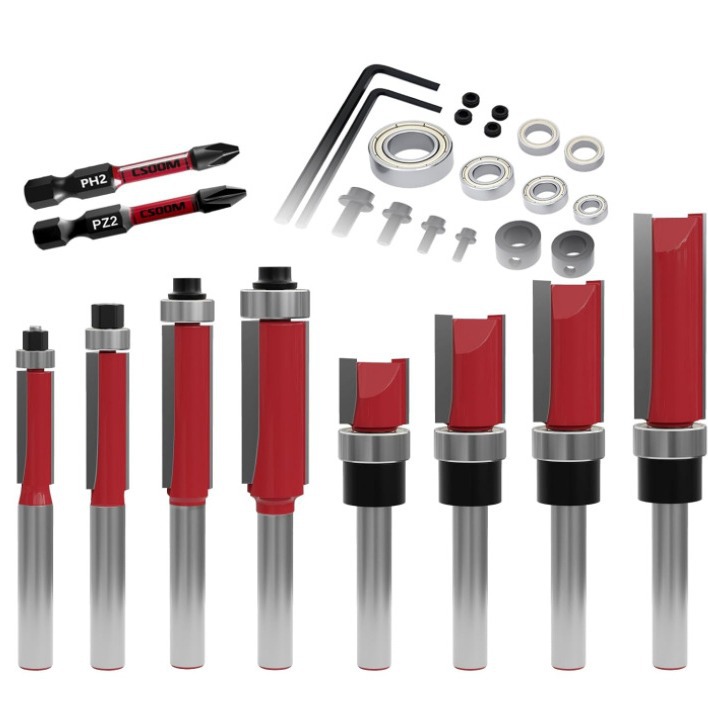
Key parameter analysis to optimize CNC wood cutting efficiency and processing accuracy
Most CNC woodworking processing problems are caused by unreasonable tool parameter matching. Tool diameter, flute configuration and maximum cutting depth are three core parameters that directly affect processing accuracy, efficiency and safety, which must be fully considered in project design and tool selection.
Tool diameter balances processing efficiency and detail performance. Large-diameter router bits remove wood materials faster and are suitable for large-area grooving and rough cutting, but cannot complete fine and complex patterns. Small-diameter tools excel in detailed engraving and narrow groove processing, while the processing time will be correspondingly increased. Users need to select diameters according to project complexity.
Flute quantity directly affects chip removal and surface finish. Double-flute bits are widely used for soft wood processing with fast feeding speed and smooth chip discharge. Multi-flute tools provide more stable cutting and finer surface effect, ideal for hard wood finish machining. In addition, cutting depth matching cannot be ignored. Shallow cutting tools are for surface trimming, while thickened reinforced bits are suitable for deep grooving to prevent tool breakage.
Scientific parameter matching eliminates tool shaking and breakage risks, ensures stable cutting speed and feed rate, and greatly improves the yield and overall efficiency of CNC woodworking projects.