


Blog
5 Must-Have Wood Trimmer Router Bits: Selection Guide, Usage Tips & Buying Advice

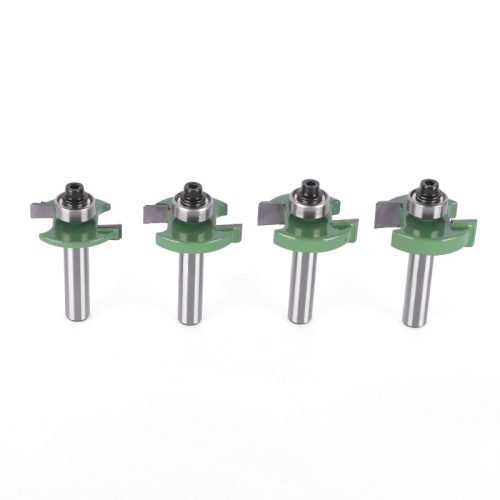
5 Must-Have Wood Trimmer Router Bits: Selection Guide, Usage Tips & Buying Advice
Introduction
A wood trimmer, also referred to as an electric wood milling machine, is one of the most versatile and indispensable power tools in any professional woodworking workshop. It greatly boosts working efficiency for cabinet building, panel trimming, precision grooving, and furniture edge finishing. Even so, most woodworkers face two common dilemmas: unsure which router bits to invest in and blindly buying full router bit sets that offer little real-world value. Choosing the right individual router bits directly impacts cutting precision, finish quality, assembly accuracy, and long-term tool cost control. This professional guide breaks down the top five most frequently used, high-performance trimmer router bits preferred by experienced woodworkers. It also covers practical buying logic and safe operating techniques to help beginners and veteran craftsmen optimize their daily woodworking workflow.
1. Is It Worth Buying a Full Router Bit Set?
The Hidden Disadvantages of Universal Bit Kits
Many woodworking beginners are attracted to discounted all-in-one router bit bundles, believing these complete kits deliver the best value. These sets come with dozens of different bit styles and appear to cover every possible woodworking application. In actual workshop practice, however, over 80% of the included bits sit unused for years. Most remain coated with factory protective oil, taking up valuable storage space while delivering zero practical benefit, making these seemingly budget-friendly sets a long-term waste of money.
Standard router bit sets are designed for general-purpose use rather than precise industrial or cabinet-grade work. Their generic blades often feature lower-grade materials, inconsistent grinding, and weaker durability. During continuous cutting, they are more likely to produce vibration, tool runout, rough edges, and surface burrs. In comparison, purchasing high-quality single router bits based on your actual processing needs delivers far better stability, cleaner cuts, longer service life, and higher overall cost performance. Professional single bits adopt premium carbide materials and precision sharpening, perfectly matching daily grooving, edge trimming, and tenon joint fabrication tasks.
2. Top 5 Most Practical Wood Trimmer Router Bits for Workshop
2.1 1/2 Inch Straight Bit (Core Universal Tool)
The straight router bit is the most fundamental and multi-functional tool in woodworking. It excels at straight grooving, dado cuts, and precise rabbet milling, making it essential for plywood cabinet construction. Professional woodworkers commonly use this bit for machining 3/4-inch cabinet-grade plywood. Instead of cutting full 3/4-inch grooves that result in loose or uneven fits due to nominal plywood thickness variations, experienced craftsmen cut 1/2-inch grooves on cabinet side panels and mill 1/4-inch tenons on shelf boards. This method creates accurate, tight-fitting joints with consistent gaps and stable structural assembly.
2.2 Pattern Bit with Bearing (Precise Curve Processing)
Creating uniform, symmetrical curved components is one of the most challenging woodworking tasks. Ordinary router bits struggle to replicate identical shapes across multiple workpieces, leading to inconsistent finished parts. The bearing-guided pattern bit completely solves this issue. Woodworkers can create a custom master template, secure it onto raw wood stock, and let the top ball bearing follow the template contour for precise, repeatable shaping. For best results, rough-cut the workpiece to within 1/16 inch of the final dimension first, then use the pattern bit for clean, precise finishing to produce perfectly uniform curved components in batches.
2.3 Round Over Bit (Comfortable Edge Finishing)
Premium furniture requires not only attractive visual quality but also smooth, safe, comfortable edges. Round over router bits are specially designed for softening sharp wood corners and creating clean rounded edges. The 1/16-inch small round over bit is the most popular option because it removes minimal material, preserving sharp, neat panel lines while eliminating harsh, unsafe square edges. Woodworkers can select different round over sizes according to design requirements to add subtle texture, softness, and premium detail to furniture edges.
2.4 Chamfer Bit (Visual Layering Decoration)
Chamfer bits create clean, angular beveled edges on wooden panels. These sharp, reflective bevels catch and refract ambient light, producing distinct visual depth and elevating the overall aesthetic grade of finished furniture. The adjustment process is extremely flexible: users simply raise or lower the router bit height to control chamfer width, allowing multiple decorative edge styles with a single bit. It is an ideal tool for upgrading plain board edges with professional layered visual effects.
2.5 Rabbet Bit (Efficient Batch Grooving)
For woodworkers who regularly work with plywood and mass-produce standard joint rabbets, the rabbet router bit is a major efficiency booster. Equipped with a precision ball bearing guide, it delivers consistent offset spacing for fast, accurate rabbet cutting. By swapping bearings of different outer diameters, users can freely adjust rabbet width to match various panel thicknesses and assembly standards. This flexibility drastically reduces repetitive setup work, speeds up batch production, and greatly improves finished product uniformity.
3. Professional Safe & Efficient Operation Tips
Even the highest-quality carbide router bits cannot deliver optimal results without standardized, disciplined operation. Professional woodworkers prefer mounting the wood trimmer firmly onto a router table instead of using it handheld. A stable table base and adjustable fence eliminate workpiece vibration, shifting, and cutting deviation, resulting in smoother surfaces, sharper edges, and far more accurate dimensional consistency. Additionally, matching the correct bit type and properly adjusting bit height according to each cutting task reduces tool overload, prevents chipping and burrs, minimizes premature wear, and significantly extends overall router bit lifespan.
FAQ
Q1: Are router bit sets suitable for professional workshop use?
Generally not recommended for professional workshop production. Pre-assembled router bit sets contain many generic, low-precision, redundant bits that rarely meet the strict tolerance and durability demands of batch woodworking. Serious woodworkers should invest in high-quality single-purpose router bits tailored to their common processing tasks for better precision, durability, and long-term value.
Q2: Which router bits are necessary for cabinet making?
These five core router bits cover nearly all cabinet making needs: straight bits for grooving and tenon joints, pattern bits for custom curve shaping, round over bits for smooth edge rounding, chamfer bits for decorative bevel finishing, and rabbet bits for efficient panel joint fabrication.
Q3: Handheld or bench-mounted trimmer, which is better?
Bench-mounted trimmer operation is strongly recommended over handheld use. Router table setups provide superior stability, rigid workpiece support, precise fence guidance, and greatly improved operational safety. Cuts are cleaner, dimensions are more consistent, and error rates are significantly lower for all formal woodworking projects.
Q4: How to improve the service life of router bits?
Maximize router bit service life by selecting the correct bit style for each task, adjusting bit height properly to avoid over-cutting, stabilizing workpieces with firm fixtures or vacuum hold-down, avoiding excessive feed speed, and using bench-mounted cutting setups to minimize vibration, runout, and uneven tool load.