H1: Bevel Router Bits: Overview, Functions and Common Woodworking Applications
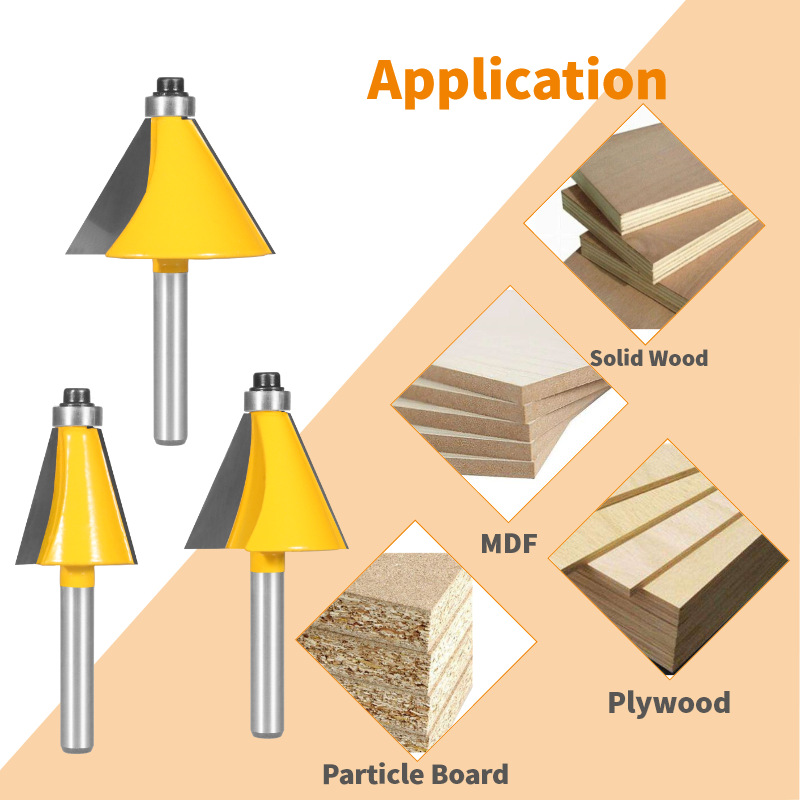
Bevel router bits are specialized woodworking cutting tools designed to create angled beveled edges and clean chamfer finishes on wooden panels. Unlike straight router bits that perform flat grooving and trimming, bevel router bits focus on angled edge shaping, providing decorative and structural edge processing solutions for furniture production and panel customization.
Most bevel router bits adopt high-hardness tungsten carbide blades, maintaining sharp cutting performance during long-term batch processing. Common angle specifications include 15°, 22.5°, 30°, and 45°, covering most conventional bevel trimming and chamfering needs for laminate boards, decorative panels, solid wood and plywood materials. Many models are equipped with precision bearings to support template profiling, ensuring consistent edge angles for every workpiece.
In actual workshop production, bevel router bits are widely used for cabinet door edge finishing, furniture surface chamfering, craft workpiece angle shaping and board edge deburring. Standardized bevel processing can eliminate sharp edges, improve product appearance grade, and enhance the fitting tightness between assembled wood components.
While optimizing woodworking tool matching, electronic accessory selection also affects overall equipment stability. Devices such as tact switch ensure stable signal control for automated woodworking machinery, helping workshops achieve continuous and precise processing operations. Matching professional bevel router bits with stable control accessories can effectively reduce processing errors and improve finished product uniformity.