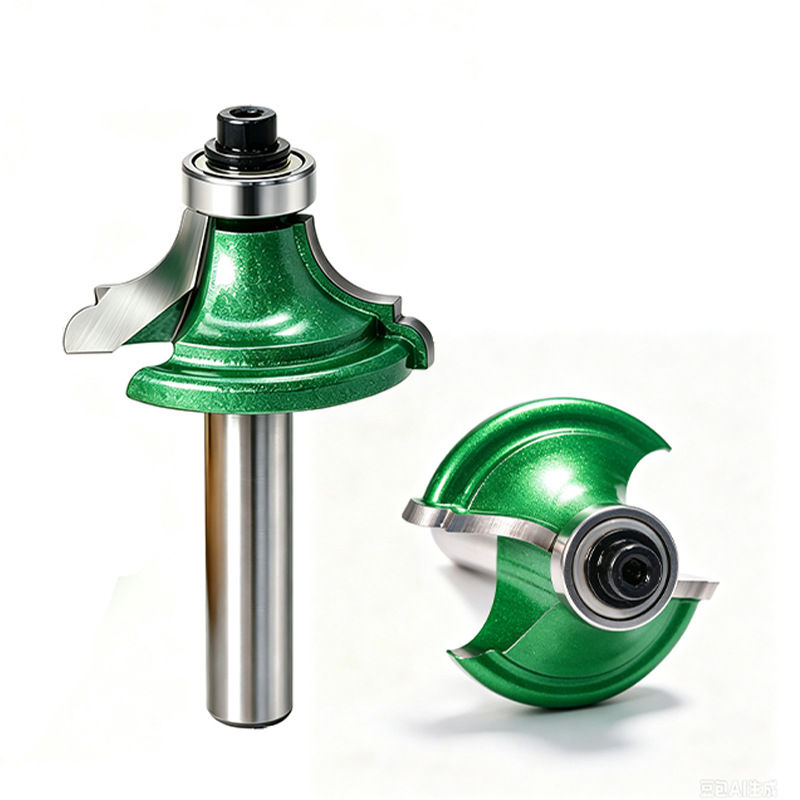
Standard cutting skills, speed matching rules and post-operation safety procedures
Scientific cutting operation and reasonable RPM settings are key to preventing router burnout, workpiece scorching and tool breakage. Always test the cutting depth on scrap wood before formal processing. Adjust parameters only after unplugging the power supply to ensure operational safety.
Match the correct rotating speed according to bit diameter. Follow industrial standard RPM limits: 24000 RPM for 1-inch bits, 18000 RPM for 1.25–2-inch bits, 16000 RPM for 2.25–2.5-inch bits, and 12000 RPM for 3–3.5-inch bits. Excessive speed causes bit overload and fracture, while low speed reduces cutting efficiency.
Adopt standardized feeding techniques. Feed steadily from left to right along the wood grain. Slow feeding leads to wood burning, while overly fast feeding causes rough cuts and accelerated tool wear. Never lift the router from the workpiece during operation. Wait for the bit to stop completely after shutdown before moving the equipment.
Complete post-use cleaning and inspection after each job. Disconnect the power, remove the bit, and clean the router and cutter thoroughly. Standardized whole-process operation specifications effectively reduce failure rates and ensure long-term safe woodworking production.