Why pull back the router bit after full insertion? Debunk common wrong rumors
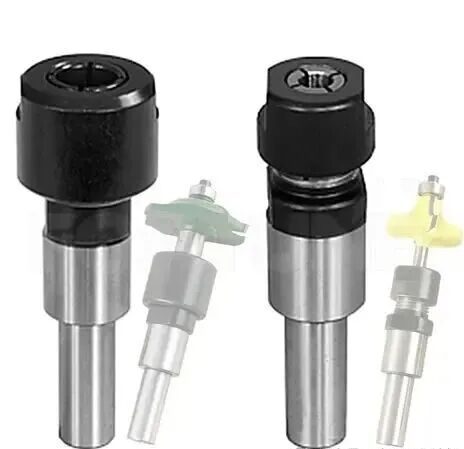
Router collets (collet chucks) rely on a precision taper clamping mechanism to lock milling cutters. When tightening the collet nut, the outer tapered surface of the collet is pressed into the spindle’s inner taper hole, squeezing the collet inward to grip the tool shank with strong friction. This friction force prevents bits from slipping, rotating or popping out during high-speed wood routing.
Most woodworkers misunderstand the standard insertion operation. The correct procedure is inserting the bit fully to the spindle bottom, then pulling it back 1/16 to 1/8 inch before tightening. Popular rumors claim this step reduces vibration or blocks heat transfer, which are completely incorrect.
The real mechanical reason is axial clearance reservation. If the shank is tightly pressed against the spindle base without gaps, the collet cannot slide inward while tightening. It creates a false locked state with insufficient clamping force. Under cutting pressure, the router bit will gradually creep outward, causing tool wobble, inaccurate cutting and serious safety risks.
Reserving a tiny gap allows the tapered collet to pull the bit inward during tightening, achieving tighter and more stable clamping. This basic principle applies to most standard woodworking routers and trimmers for reliable long-term operation.