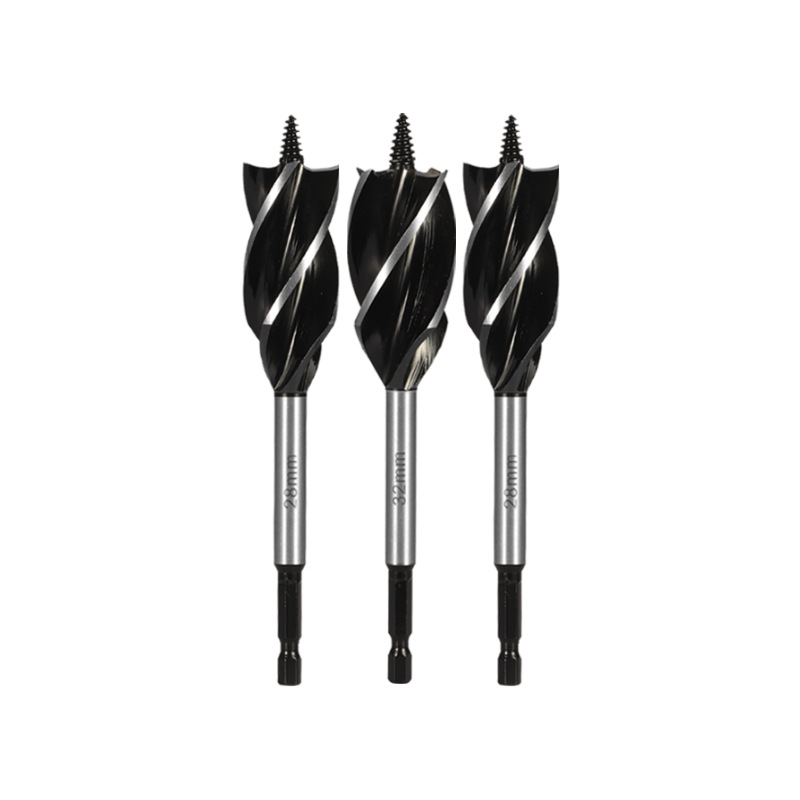
Key differences between wood router bits and drill bits for hole processing scenarios
Many woodworkers confuse hole router bits with ordinary drill bits, but the two tools have completely different applicable scenarios and processing effects. Choosing the right tool is the key to avoiding wood cracking and rough holes.
Traditional wood drill bits rely on central piercing and spiral chip removal, suitable for fast through-hole drilling. However, they are prone to fiber tearing and outlet burst edges, failing to meet the precision requirements of furniture assembly. A professional hole router bit uses peripheral rotary milling to cut fibers evenly, with almost no burrs on hole edges.
In terms of hole shape, drill bits can only make simple round holes. Router bits support flat-bottom holes, step holes and hidden counterbore holes, perfectly matching self-tapping screw installation and hardware embedding needs. In terms of depth control, router bits have higher precision and are not easy to over-cut plates.
For rough quick drilling, standard drill bits are sufficient. For refined production such as cabinet splicing, furniture hardware installation and decorative hole making, hole router bits are the optimal choice to ensure stable and flawless processing results.