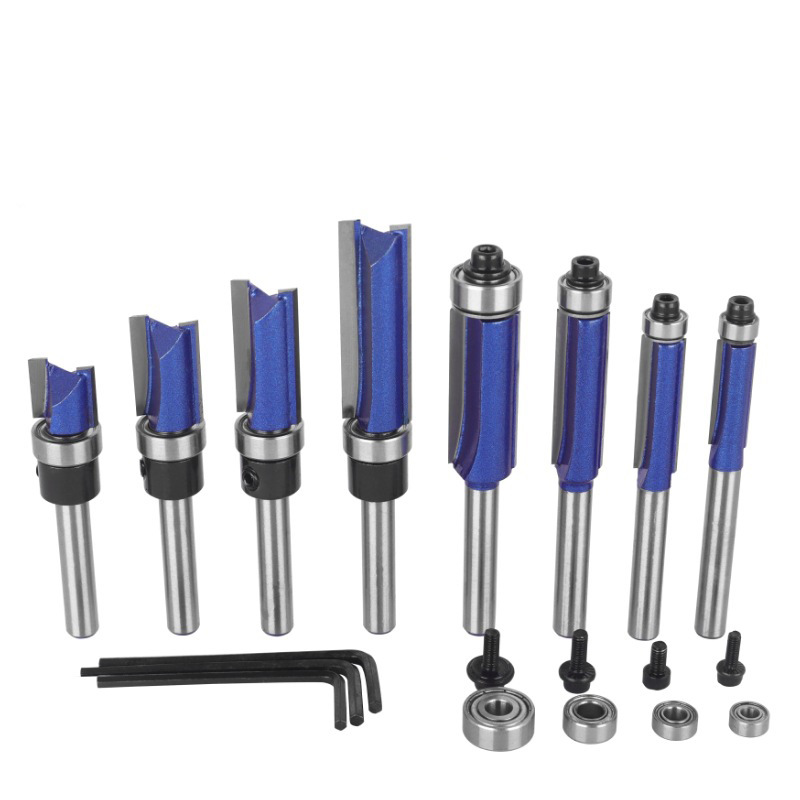
Solve template routing and wood grooving difficulties in handheld and table routing operations
Although bearing-guided router bits are easy to use, many woodworkers encounter common problems in actual routing, especially when the cutter cutting length exceeds the workpiece thickness. Improper operation easily causes base plate damage or lost guiding effect.
In handheld routing scenarios, if the cutter is lowered to cut through the board, the tool tip will scratch the backing plate. If the cutter is raised, the bearing will separate from the template and lose positioning guidance. Two practical solutions can completely solve this problem: use a thicker template to raise the whole machine, or flip the workpiece and adopt end-bearing flush trim bits for reverse processing.
For table routing operations, reverse feeding is extremely dangerous and will cause grain tearing and tool chattering. Do not adjust the feeding direction blindly. The correct method is to flip the workpiece and place the template on the upper surface, matching with end-bearing trimming bits to avoid reverse grain cutting.
Mastering these practical skills can avoid defective products and safety hazards, maximize the performance of bearing-guided bits, and ensure stable and high-precision wood processing.