


Blog
Hole Router Bits: Drill Press and Mortising Machine Guide

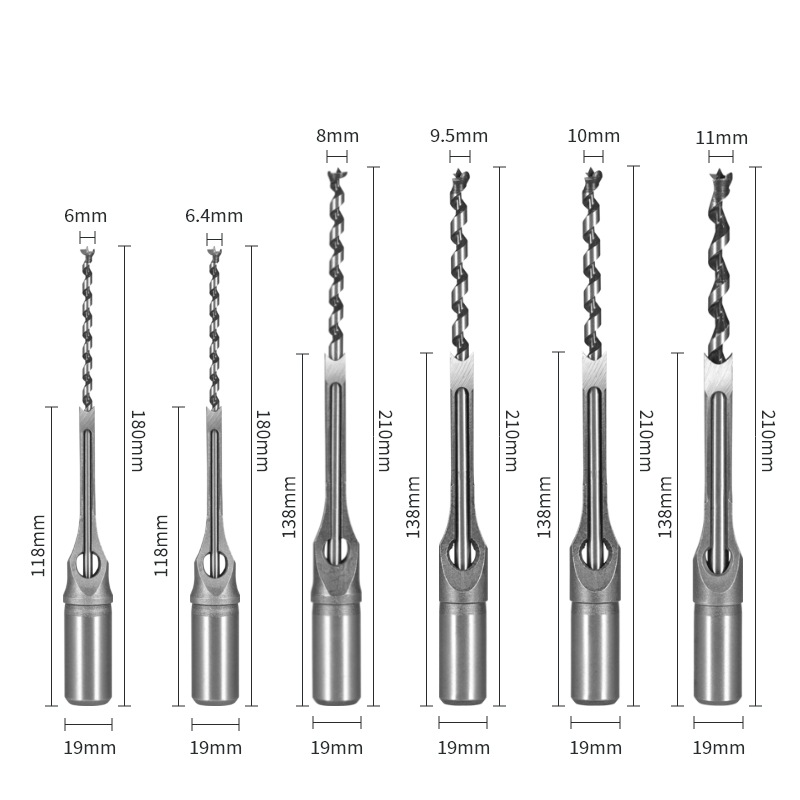
Drilling machines and mortising machines both cut mortises by removing wood from a joint. Most machines bore with a rotating bit, so they only make round holes. A mortising machine, however, can cut a square hole directly. The drill press is mainly a tool for boring dowel holes, and it drills vertical or angled holes with equal ease. When you join with dowels, success depends entirely on drilling accuracy. Beyond spindle and chuck precision, the bit itself shapes the result. A cheap bit rarely cuts a truly round hole. Fit quality hole router bits and watch for wobble during the cut. That simple check tells you whether the spindle and chuck run true. Test the setup on scrap before you commit to good stock. Any shake points to a bent shank, a worn chuck, or a spindle that no longer runs true. Fix that fault first, because a dowel joint cannot hide a sloppy hole.
Using a Fence to Cut Mortises
A fence turns a drill press into a mortising tool. The fence sets the distance from bit to fence, so it locates every hole. You can then drill a row of holes to form a mortise. Remember that the fence does not need to sit parallel to any table edge. It only needs a fixed distance from the bit center. Therefore, straightness matters more than angle. Keep the fence flat and clamp it firmly in place before you start. Some presses tilt the table for angled boring. If yours does not, use an angle jig instead. The jig holds the part at the angle you need and keeps your hands clear of the bit.
Auxiliary Tables and Drilling Jigs
Several jigs help a drill press make mortises, and an auxiliary table is one of them. Most presses ship with a ribbed cast iron table. Clamp or bolt a sub-table on top, and mounting other jigs becomes far easier. Build the sub-table from 3/4 in (19.1 mm) MDF. Next, glue a solid wood board to its underside for stiffness. Then fix the whole panel to the side of the press table. For end grain work, bolt a vertical drilling jig in place and rotate the table to vertical. Use the jig’s adjustable fence to bore into the end of a part.
Choosing Hole Router Bits for Each Machine
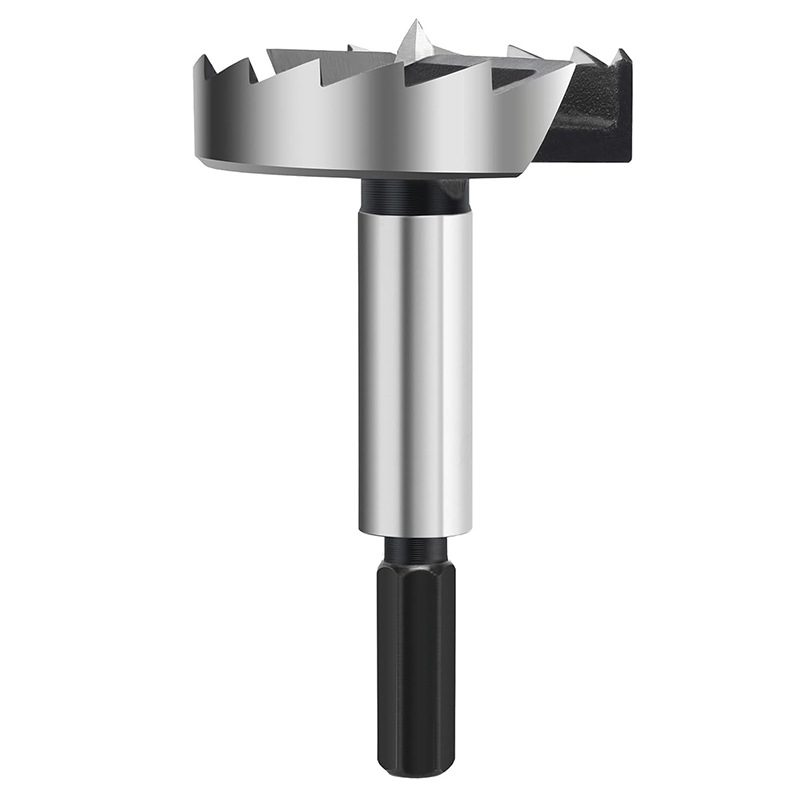
Bit choice drives accuracy on every machine you run. A twist bit cuts both metal and wood cleanly. A spade bit only roughs out wood and leaves a coarse wall behind. A center bit gives precise starting location for a clean entry. A multi-tip bit handles larger holes with far less effort. A flat-wing bit suits angled boring on a tilted table. Moreover, end mills and hollow chisel mortising bits also fit a drill press for mortise work. Only quality hole router bits deliver accurate holes, so avoid bargain sets. When you drill through, slip scrap wood underneath to protect the table.
Horizontal Mortising Machines
The horizontal mortising machine is an industrial machine built for mortises alone. Its table travels front to back and left to right, so the bit opens a slot across the part. Other milling machines can do the same job with wider reach. A multi-axis mill moves in three directions at once. That range lets it cut many mortise styles, shape tenons, and work at set angles. Its horizontal table holds and moves the stock. The router mounts on a vertical table that moves up and down. However, any horizontal machine needs a table that travels smoothly along the spindle. There must be no rocking or tilt during the pass. The table also must not sag when you clamp a long or heavy part. Set the depth stop before the first pass so every mortise matches the last one.
Hollow Chisel Mortisers
A hollow chisel mortiser is a dedicated machine for square mortises. Converting it to ordinary drilling takes major modification to the head. The bit must be finely adjusted and ground for clean cutting at every corner. In addition, square mortise quality comes mostly from the machine’s lever drive system. Weight helps a great deal here. The heavier the hollow chisel mortiser, the better the mortise it produces on the floor. Sharpen the chisel and the bit as a matched pair as well. A dull edge tears the walls instead of paring them clean, and the joint loses its strength.
Match the Machine to the Joint
Pick the machine that fits the joint and the volume you run. A drill press with a fence handles occasional mortises on a small budget. A horizontal mortiser suits production work on a furniture line. A hollow chisel mortiser gives the cleanest square holes when the job calls for them. Whichever you run, pair it with premium hole router bits and keep them sharp. Finally, check runout before each session and set scrap under through-holes. For a full selection, browse our full hole router bits collection before your next project.