Blog
CNC Router Bit Technical Guide: How to Effectively Reduce Tool Breakage Risks

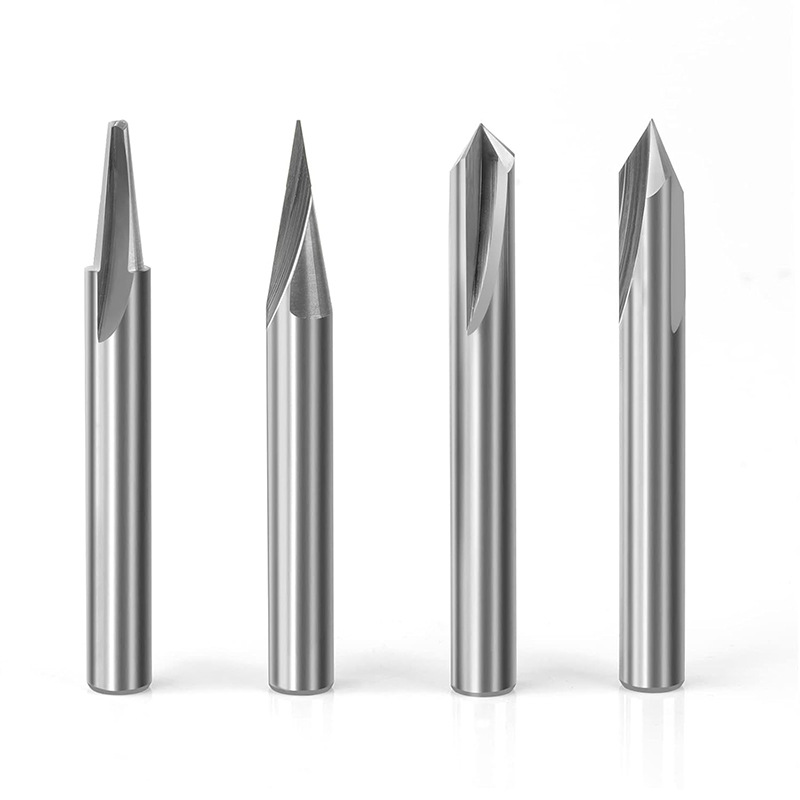
CNC router bit breakage is one of the most costly failures in CNC production, directly hurting machining accuracy, surface finish and overall efficiency. Poor tool selection, irregular clamping and neglected maintenance are the leading causes of early cutter damage. This technical guide explains how to prevent CNC router bits failure through scientific selection and disciplined operation.
Maximize Performance with Scientific Selection
The performance of a CNC engraving machine relies heavily on the condition of its cutting tools. Even high-end equipment cannot deliver stable results with incorrectly selected or low-quality router bits. Reasonable tool matching is the premise of efficient production, because it avoids defective edges and unnecessary tool damage. For mainstream applications, solid carbide router bits stand out for their hardness, wear resistance and stable cutting performance.
Material-Matched Tool Geometry Selection
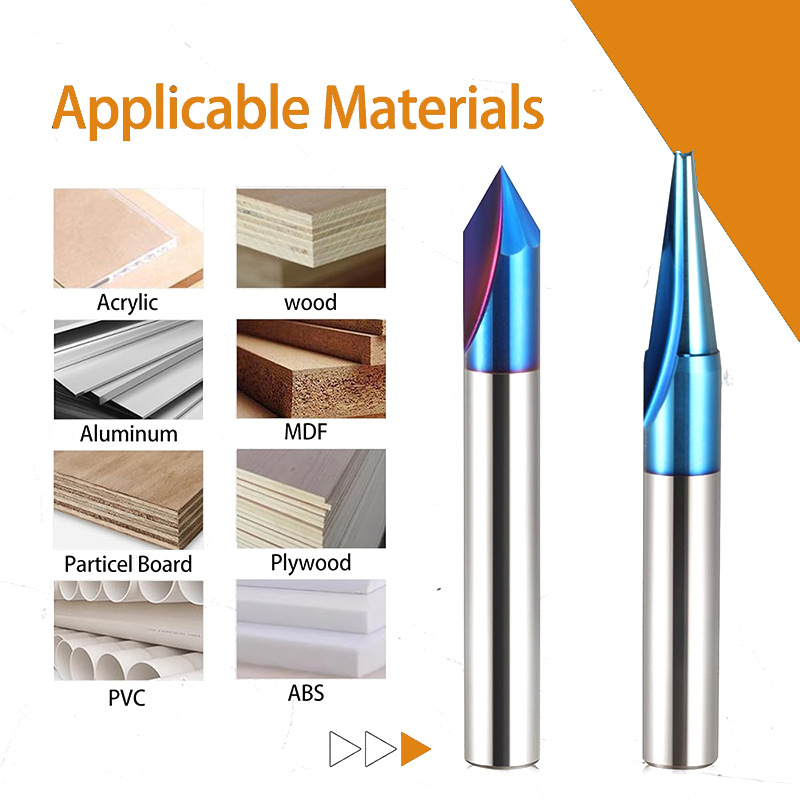
Different materials require exclusive tool geometric designs, and cross-material misuse is a common invisible cause of poor cutting and premature wear. Cutters made for laminated panels cannot adapt to aluminum, just as acrylic-specific cutters fail on composite boards. To avoid mismatched selection, consult professional CNC tool suppliers for supporting tool specifications, or verify parameters through professional industry databases.
Cutting Depth Matching Rules
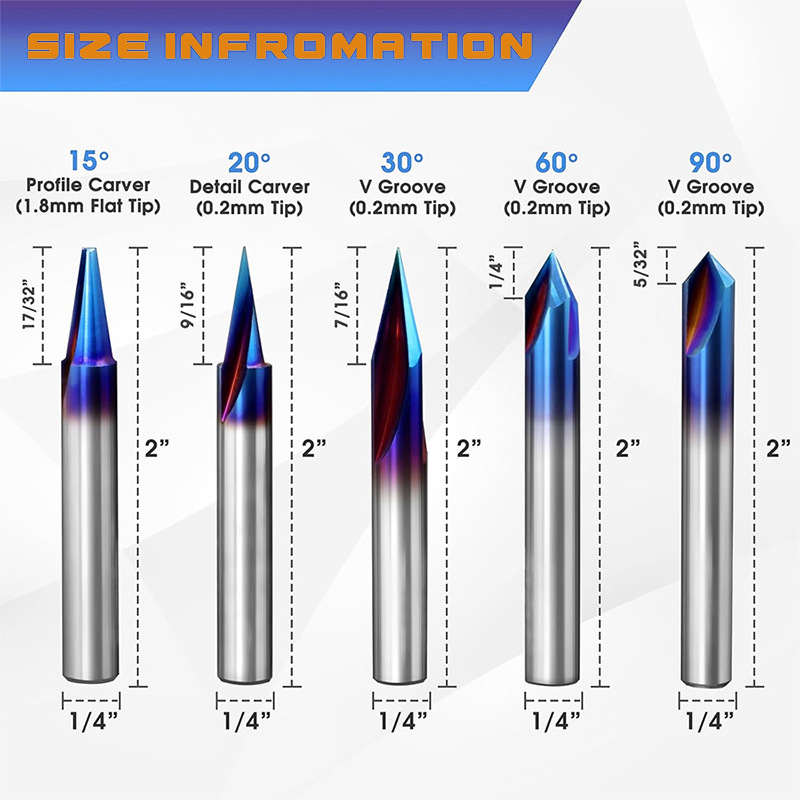
Machining depth dictates the reasonable tool length and diameter configuration. A universal industrial rule limits the maximum safe cutting depth to three times the tool diameter. For instance, a 6mm diameter bit supports a maximum cutting depth of 18mm to maintain basic structural rigidity. Following these depth rules is a proven way to reduce CNC router bit breakage in daily production.
In production, always prioritize the shortest available tool for the target task. A shortened configuration suppresses operational vibration, eliminates bending deflection and reduces the probability of premature wear and breakage. A more stable tool state also allows higher and safer feed rates, improving overall processing efficiency.
Key Factors for Tool Diameter Confirmation
Multiple practical factors jointly determine the final tool diameter. The core indicators include the minimum inner fillet radius for workpiece molding, preset cutting depth standards, expected edge finish quality and basic tool structural rigidity. Balancing these indicators ensures both processing accuracy and operational stability.
Optimize System Rigidity to Stabilize Cutting Quality
Tool performance is not only determined by the tool itself but also restricted by the overall rigidity of the entire CNC system. System rigidity directly affects vibration amplitude, cutting smoothness and tool service life. Comprehensive rigidity inspection should cover three core dimensions before formal processing.
Machine Frame Stability
Welded frames and gantries feature higher overall rigidity and better vibration absorption than bolted assembled structures. This effectively reduces high-frequency resonance during high-speed cutting.
Workpiece Clamping Firmness
Operators must ensure flat workpieces are free from warpage and gaps between the material and machine bed. This prevents workpiece displacement and vibration during cutting.
Spindle and Accessory Condition
Worn spindle bearings easily trigger cutting resonance. Aging collets and lock nuts, though classified as consumables, are frequently overlooked. Excessive wear of these accessories causes tool shaking, which further induces poor finish and tool fatigue damage.
Core Technical Guide: How to Effectively Avoid CNC Router Bit Breakage
Statistics show that most CNC router bit breakages stem from incorrect clamping or faulty collet conditions. Tiny clamping deviations that are barely visible to the naked eye can bring fatal risks to high-speed rotating tools.
The Hidden Collet Clamping Risk
A tool rotating at 18,000 RPM faces severe stress risks with a microscopic runout deviation of merely 5 microns. This tiny gap equals the thickness of dust and resin accumulated inside the collet. Since collets are manufactured with ultra-tight tolerances, slight deformation prevents complete fitting between the collet and tool shank. The resulting uneven clamping force triggers poor edge finish, reduced tool life, continuous metal fatigue and eventual sudden breakage.
Daily Operational Anti-Breakage Standards
Many effective measures are simple but easily overlooked. First, replace chipped and worn tools before breakage occurs, because damaged edges exponentially increase cutting resistance. Second, adopt the shortest and largest-diameter tool within the allowable range to maximize rigidity. Third, strictly avoid tool dropping and impact, since solid carbide is brittle and cannot withstand sudden shock loads.
Replace tools once surface quality declines or extra propulsion force is required for feeding. Never allow tools to dwell statically in cutting positions, because continuous and stable feeding is required for free biting and smooth cutting. Unreasonable feed rates are another major cause of failure. Excessively fast feeding leads to deflection, while overly slow feeding causes severe friction and burning. Both conditions accelerate aging and breakage, so following these daily standards directly reduces CNC router bit breakage in busy shops.
Spindle and Collet Maintenance Specifications
Standardized spindle and collet maintenance is the foundation of long-term stable operation. Regularly inspect collets for wear, dirt accumulation and slippage marks on tool shanks, which are intuitive signs of abnormal clamping. Detect spindle runout accuracy with a dial indicator to eliminate resonance and deviation risks.
Notably, adapter bushings are prohibited for formal mass production to reduce collet size. These accessories are only suitable for prototype production and temporary evaluation. Long-term production use causes unstable clamping and severe tool wear.
Temperature Control and Tool Geometry Optimization
Cutting heat accumulation is an invisible killer of CNC router bits. Friction generates continuous high temperature, which accelerates material fatigue and reduces service life. Applying coolant appropriately during cutting effectively dissipates heat and stabilizes performance. Since heat generation correlates with material density and contact area, increasing feed rate moderately for high-density materials helps reduce heat accumulation.
Tool geometric parameters also determine inherent cutting stability. Check and match the front rake angle, rear clearance angle and effective cutting edge length before use. Reasonable configuration reduces cutting resistance, while irregular angles cause concentrated stress and early breakage.
Conclusion
Stable CNC production depends on scientific tool selection, standardized maintenance and rigorous operational habits. By matching tools to material characteristics, following cutting depth and diameter rules, optimizing system rigidity and eliminating collet clamping deviations, operators can effectively avoid CNC router bit breakage, extend tool service life and reduce production costs.
FAQ
What is the main cause of CNC router bit breakage?
Most breakages are caused by faulty collet clamping, microscopic runout deviation and accumulated dust inside the collet, which leads to uneven stress and metal fatigue of high-speed rotating tools.
What is the safe cutting depth rule for CNC bits?
The maximum safe cutting depth is limited to three times the tool diameter. Meanwhile, choosing the shortest possible tool effectively reduces vibration and breakage risks.
Can adapter bushings be used for formal CNC production?
No. Adapter bushings are only for prototype testing and temporary experiments. They cannot provide stable clamping force and will cause premature tool failure in mass production.
How to reduce cutting heat to protect CNC router bits?
Use professional coolant during cutting, and adjust the feed rate reasonably according to material density to avoid excessive friction and heat accumulation that damage tool edges.