Blog
CNC Wood Carving Tools & Material Application Guide for Woodworkers

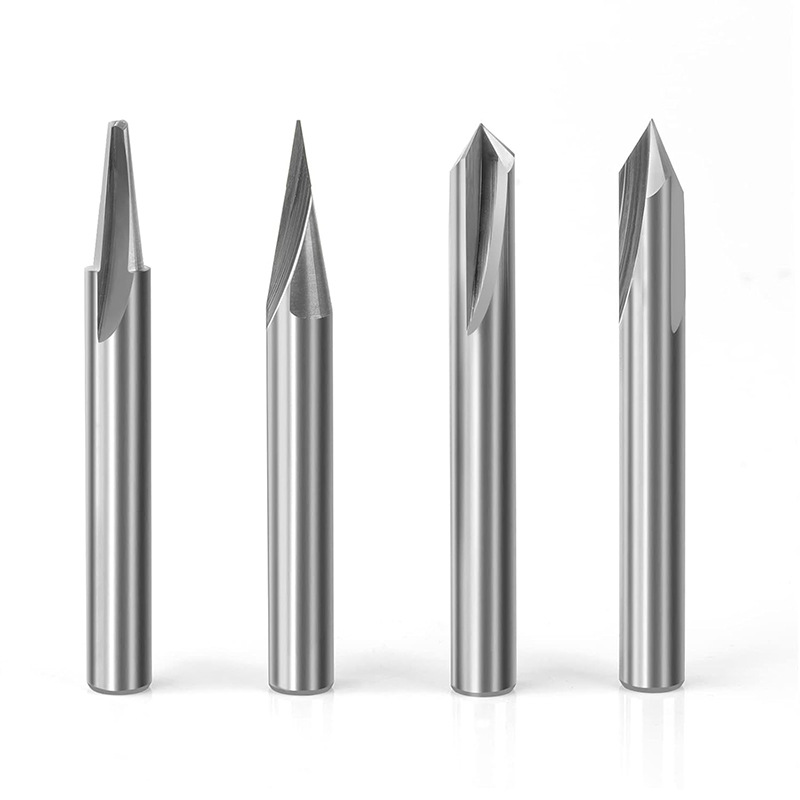
Tool selection stands as one of the most impactful decisions in CNC wood machining. It directly determines cutting speed, surface finish, production efficiency and tool service life. The wrong cutter often triggers excessive vibration, rough edges and frequent tool breakage. Choosing the right CNC wood carving tools for your material is the first step toward consistent, high-quality output.
CNC Router Bit Types & Recommended Machining Scenarios
When comparing CNC router bit selection, remember that different cutting geometries deliver distinct performance. Matching the cutter style to your priority streamlines production and improves output quality.
Single-Flute vs Two-Flute Cutters
Single-flute cutters excel when fast machining speed is your top priority. They do produce a relatively rougher surface finish. They work well for rapid roughing passes where fine texture is not required. Two-flute cutters are the preferred option when clean surface quality is the main goal. More cutting edges distribute load evenly and reduce tearing on wood fibres.
Upcut Spiral Bits for Fast Chip Evacuation
Upcut spiral bits are widely adopted for grooving, tenon cutting and fast chip evacuation. Their helical geometry lifts shavings out of the cutting path quickly. This prevents chips from clogging inside the cut. It also stops the workpiece surface from burning during long runs.
Matching the Cutter to Material Type
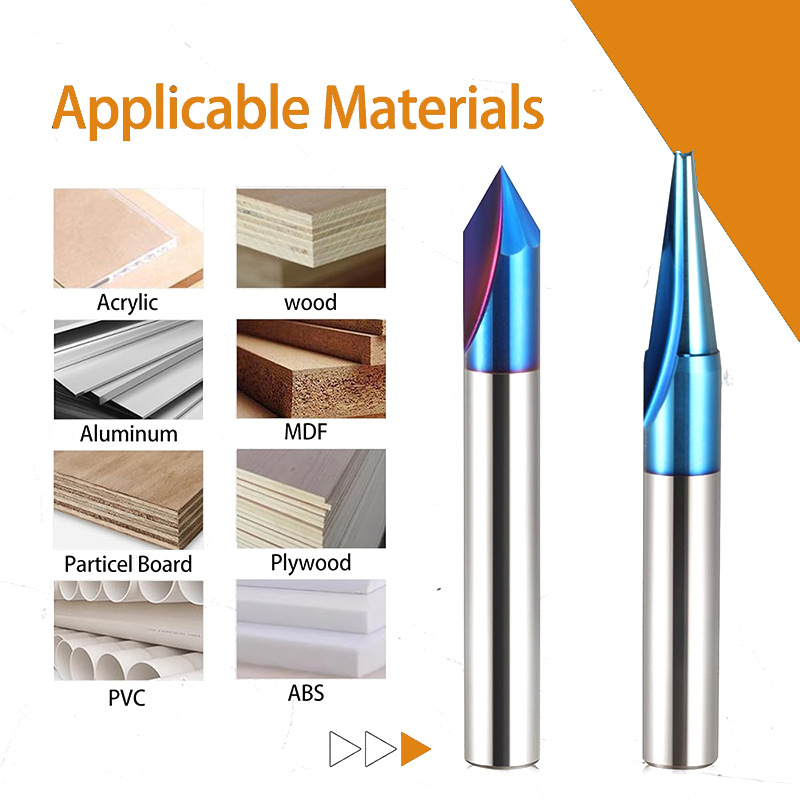
Material type further shapes your choice of CNC wood carving tools. For natural solid wood, spiral, straight-flute or shear cutters are all viable options. Composite panels, particleboard, plywood and MDF perform best with carbide spiral or straight-flute bits. Spiral cutters help when surface finish matters or motor horsepower is limited.
Critical Guidelines for Cutting Length
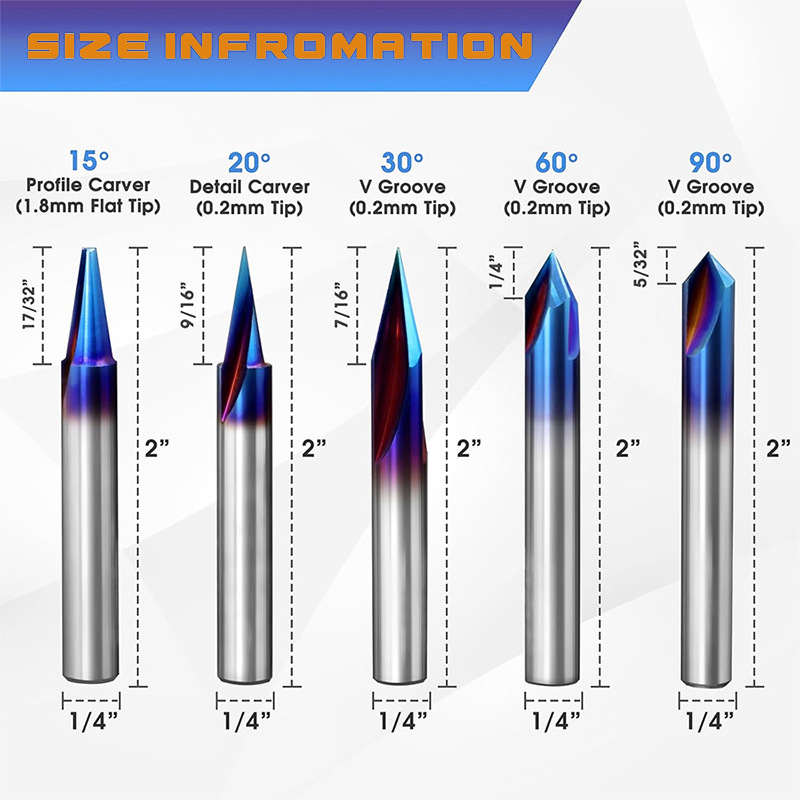
Cutting length is a parameter many buyers of CNC wood carving tools overlook. Yet it heavily influences vibration, cutter deflection and final surface quality. Following simple rules greatly reduces tool failure risk.
Select the shortest usable cutting length that accommodates your material thickness. An overly long cutter introduces unwanted flex and vibration during rotation. These issues create wavy cuts and increase the chance of bit breakage.
A reliable rule of thumb limits cutting length to four times the cutter diameter. Bits exceeding this ratio suffer drastically higher fracture risk. Whenever possible, choose the largest feasible bit diameter. Greater rigidity stabilizes cutting and extends tool life.
Tool Material Comparison & Performance Characteristics
The base material of your CNC wood carving tools defines durability, impact resistance and lifespan. Each material class has clear strengths and tradeoffs for wood CNC work.
Solid Carbide Tools
Among CNC wood carving tools, solid carbide cutters lead in wear resistance. They are made from ultra-hard tungsten carbide grains bonded with metallic cobalt. These bits keep a sharp edge far longer than high-speed steel alternatives.
They handle heavy cuts at high feed rates with consistent precision. However, their extreme hardness brings a key limitation. Solid carbide is brittle and cannot withstand sudden shock loads. Never drop these cutters or expose them to sharp impacts.
Indexable Carbide Insert Tools
Indexable carbide insert tools combine long-wearing carbide edges with a reusable steel body. This delivers strong cutting performance at lower running cost. One limitation is that most indexable cutters only use straight-flute designs. That restricts their use for certain high-speed finishing jobs.
High-Speed Steel (HSS) Tools
High-speed steel is an engineered cast alloy with a refined internal grain structure. HSS bits generally have a shorter lifespan than carbide cutters. Their main advantage is superior impact tolerance. This makes them more forgiving under rough operating conditions.
Ceramic and Diamond-Coated Tools
When standard solid carbide wears too quickly, ceramic or diamond-coated cutters become a worthy upgrade. Operators must weigh two practical considerations. The upfront cost of coated tooling is higher. Feed rates often must be reduced to protect the specialized coating during machining.
Final Summary
Successful CNC wood carving projects depend on choosing the right CNC wood carving tools. Balance bit geometry, cutting length and tool material for each job. Prioritize single-flute bits for speed and two-flute bits for fine finishes. Always follow cutting length guidelines to avoid deflection and breakage.
FAQ
When should I choose an upcut spiral CNC wood bit?
Use upcut spiral bits for grooving, tenon making and jobs requiring fast chip removal. They lift wood shavings out from the cutting zone efficiently.
What is the 4x rule for CNC bit cutting length?
As a general rule, cutting length should not exceed four times the tool diameter. Longer cutters bend easily, vibrate more and are prone to breaking during CNC machining.
What are the main differences between solid carbide and HSS CNC bits?
Solid carbide stays sharp much longer for high-feed cutting but is brittle and vulnerable to shock. HSS tolerates impacts better yet wears down faster in continuous production.