


Blog
Wood Drill Bits: Applications & Selection Tips – Pick the Right Bit, Save Time & Material

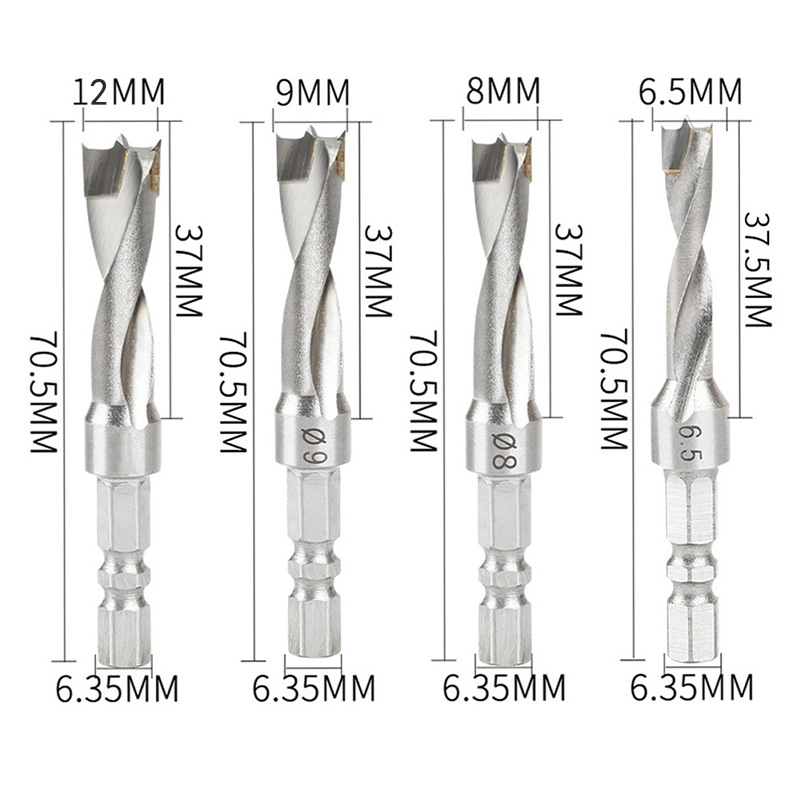
Poor bit selection causes most drilling defects: split timber, splintered hole edges and ruined panels. Match the right wood drill bits to the material instead, and efficiency rises while board quality stays intact. This guide explains the common bit types, their core features and practical field selection rules. It also clarifies how handheld wood drill bits differ from industrial hole router bits, so you can choose correctly for both site work and batch panel production.
Why Wood Needs Dedicated Drill Bits
Standard metal drill bits can physically enter wood, but they will not cut it cleanly. Metal bits rely on brute-force tearing, which rips grain, leaves uneven walls and produces heavy exit burrs. Professional wood drill bits use shear-cutting geometry built for fibre structure instead.
Quality wood drill bits share four design advantages that remove common errors:
- Central locating spur: it stops the bit wandering and keeps hole position accurate.
- Outer cutting spurs: they score surface fibres before removal, which limits tear-out on both faces.
- Deep open flutes: they clear chips fast, so the bit never clogs or overheats.
- Optimised cutting angles: they suit forward and reverse grain, so shearing stays smooth.
So woodworking always calls for dedicated cutters. Metal bits bring misaligned entry, rough walls and breakout, which wrecks finished panels and wastes material.
Common Types & Practical Applications
Twist Drill Bits (General-Purpose Drilling)
Twist bits pair classic spiral flutes with dual primary cutting edges, which makes them the most widely used wood drilling tool. They cover small diameters from 1 mm to 13 mm and work in softwood, hardwood and engineered panels.
Price and compatibility are their strengths. Their limits are slight wandering, visible burrs and poor chip clearance in deep holes. Choose HSS models with an upgraded central spur to improve positioning and service life.
Overall, twist bits remain the reliable everyday option among wood drill bits, although they cannot reach industrial precision or ultra-smooth walls.
Brad Point Drill Bits (Precision Clean Holes)
Brad point bits are the premium precision solution. One sharp central spur plus two symmetrical outer spurs score the fibres before drilling begins, so alignment stays accurate and edges stay clean.
They suit small to medium holes and excel on solid hardwood, veneered boards and high-grade panels. Carbide-tipped and solid carbide versions hold their edge under continuous heat, which suits heavy workshop use.
Sub-types extend their range. Blind-hole brad point bits handle precision work such as speaker cabinet ports. Arc-edge single-point bits last longer on repeated panel drilling, and low-angle single-point designs add stability on flat boards. Furniture dowel holes, tenon joints and visible panel drilling all depend on them.
Spade / Flat Drill Bits (Fast Rough Large Holes)
Spade bits use a flat, shovel-shaped head with a central tip and two side cutting edges. They handle fast, large-diameter rough drilling from 10 mm to 38 mm or more, which fits cable routing, hardware fitting and rough carpentry.
Speed and low cost lead their advantages, yet the open structure leaves rough walls and raises exit tear-out risk. For through-holes, flip the workpiece and finish the penetration from the far side to keep splintering down.
In short, use spade bits when speed matters more than cosmetics.
Hole Saw Cutters (Oversized Round Holes)
Hole saws pair a toothed cup body with a central pilot bit, and they start at 25 mm and pass 100 mm. Door locks, downlights, ventilation ports and electrical boxes all depend on them.
No single drill bit matches that cutting capacity. Even so, run them at low RPM with high torque, because chip evacuation is slow. Clamp the workpiece firmly and control the drill with both hands to stay safe and keep holes round.
Auger Drill Bits (Deep Hole Drilling)
Auger bits use a self-feeding threaded tip and deep wide flutes, so the bit pulls steadily into timber without heavy hand pressure. That makes them the top choice for deep holes, timber framing, log construction and pergola work.
They also clear chips continuously while penetrating, which prevents clogging and overheating. The only limit is torque demand, so they need a powerful drill.
Forstner Drill Bits (Flat-Bottom & Overlapping Holes)
Forstner bits use a full cylindrical rim to cut flat-bottom holes with ultra-smooth walls. They suit medium to large holes, especially hinge cups, hardware blind holes, decorative recesses, overlapping holes and edge half-holes.
Precision and versatility set them apart. Unlike standard bits, they cut partial edge holes and interconnected overlapping holes without distortion. They cut slower and need more power, but the finish is unmatched for high-end furniture.
Industrial Boring Machine Bits (Mass Production)
Furniture lines use specialised bits built for boring machines and drill presses. Common variants include through-hole bits, blind-hole bits, 4-flute hinge boring bits, adjustable depth bits, step bits, plug cutters and self-feed bits.
Rotation marking matters here. Left-hand and right-hand tools are usually colour-coded, and flute orientation also shows spindle direction. When buying imported industrial bits, prioritise high-purity carbide edges and hardened steel substrates for wear resistance and batch consistency.
Wood Drill Bits vs Hole Router Bits
Many woodworkers confuse the two, yet wood drill bits and hole router bits serve different scenarios. Handheld wood drill bits fit standard chucks and adapt to site work, one-off holes and deep timber boring. Hole router bits mount on router spindles and boring machines for standardised batch production.
Three distinctions guide the choice. First, hole router bits run at much higher RPM on rigid spindles, so hole position repeats across hundreds of panels. Second, full carbide edges shear veneer and melamine cleanly, with no chipping or peeling. Third, router systems integrate with production machinery, while drill bits handle flexible angles and rough site conditions.
So use brad point or auger bits for small-batch solid wood and site tasks. Switch to hole router bits when you need fast, consistent hinge and dowel holes in volume.
Four-Step Selection Framework
A simple framework removes trial and error. Follow these steps on every project.
Step 1 – Select by Hole Diameter
- 1–13 mm small holes: twist bits, brad point bits
- 10–38 mm medium-large holes: spade bits for speed, large brad point bits for precision
- 25 mm+ extra-large holes: hole saw cutters
- Flat-bottom, overlapping or edge holes: Forstner bits
- Deep structural holes: auger bits
- Multi-level recessed holes: step drill bits
Step 2 – Match Type to Material & Finish
- Low-precision softwood and engineered boards: twist bits, spade bits
- High-precision hardwood and visible surfaces: brad point bits in HSS or carbide
- Dense MDF: solid carbide drill bits
- Delicate veneered plywood: carbide-tipped brad point bits
- Deep solid wood framing: self-feeding auger bits
Step 3 – Choose Material by Usage Intensity
- Carbon steel: low-cost occasional softwood drilling
- HSS high-speed steel: daily woodworking with balanced durability
- Carbide tipped or solid carbide: heavy-duty hardwood, MDF and batch work
- TiN titanium coating: longer life under repeated high-frequency drilling
Step 4 – Confirm Shank Style
- Straight shank: universal fit for hand drills and drill presses
- Hex shank: anti-slip quick-change design for impact drivers and modern chucks
Optimized RPM Speed Settings
Excess speed creates friction heat, which burns wood, scorches edges and dulls wood drill bits. Larger bits and harder timber need lower RPM. Use these ranges as a starting point:
- 3–6 mm bits: 3000–3500 RPM softwood, 2500–3000 RPM hardwood
- 6–12 mm bits: 2000–3000 RPM softwood, 1500–2500 RPM hardwood
- 12–25 mm bits: 1000–2000 RPM softwood, 800–1500 RPM hardwood
- 25 mm and above: 300–1000 RPM softwood, 300–800 RPM hardwood
Common Mistakes & Professional Fixes
- Metal bits on wood: they tear and leave burrs, so use wood-specific shear-cutting bits.
- Spade bits for hinge cups: they leave rough, unusable recesses, so use Forstner or precision brad point bits.
- Excessive RPM: it burns wood and dulls edges, so slow down for large bits and dense hardwood.
- Skipping pilot holes: timber splits, so pre-drill pilots for edge and end-grain work.
- Heavy downward pressure: it overloads the bit and builds heat, so let rotation and self-feed do the work.
- Working with dull bits: finish suffers and power is wasted, so sharpen or replace them at once.
Safety & Maintenance Tips
- Clamp workpieces firmly so timber cannot spin during the cut.
- Wear protective goggles to block chips and debris.
- Keep the drill perpendicular to the board to hold hole straightness.
- Retract the bit repeatedly in deep holes to clear chips and prevent jamming.
- Use two-handed control for large bits and hardwood.
- Clean resin and dust from the flutes after every use.
- Sharpen edges regularly and store bits in racks to avoid impact damage.
Building a Reliable Wood Drill Bits Kit
Most shops need five bits before anything else: a twist bit, a brad point bit, a spade bit, a Forstner bit and an auger bit. Wood drill bits wear at different rates, so buy quality where precision matters and save money where it does not.
Spend on brad point and Forstner bits, because they decide how visible holes look. Save on spade and twist bits, since those take rough work and get replaced more often. Then add speciality sizes only when a job demands them.
When your panel work grows, review hole router bits alongside the drilling kit. Our wood drill bits and router tooling cover both sides of that workflow, and you can browse our woodworking drill bits for clean holes when it is time to restock.
FAQ
What drill bit delivers the cleanest holes in plywood?
Carbide brad point bits perform best. Their outer scoring spurs slice the surface veneer before removal, which cuts tear-out and delamination sharply.
Can Forstner bits be used in handheld cordless drills?
Yes, but a drill press gives better stability and roundness. For handheld use, run at low RPM and clamp the workpiece firmly.
Why does wood split while drilling?
Splitting comes from dull bits, heavy feed pressure, missing pilot holes or excessive speed. Sharp brad point bits and pre-drilled pilots solve most cases.
When should I switch from drill bits to hole router bits?
Switch when volume and repeatability grow. Drill bits suit flexible site work, while hole router bits hold exact position and clean rims across large panel batches.