


Blog
Solid Carbide Spiral Router Bits for Wood: Types, Selection & Practical Application Guide

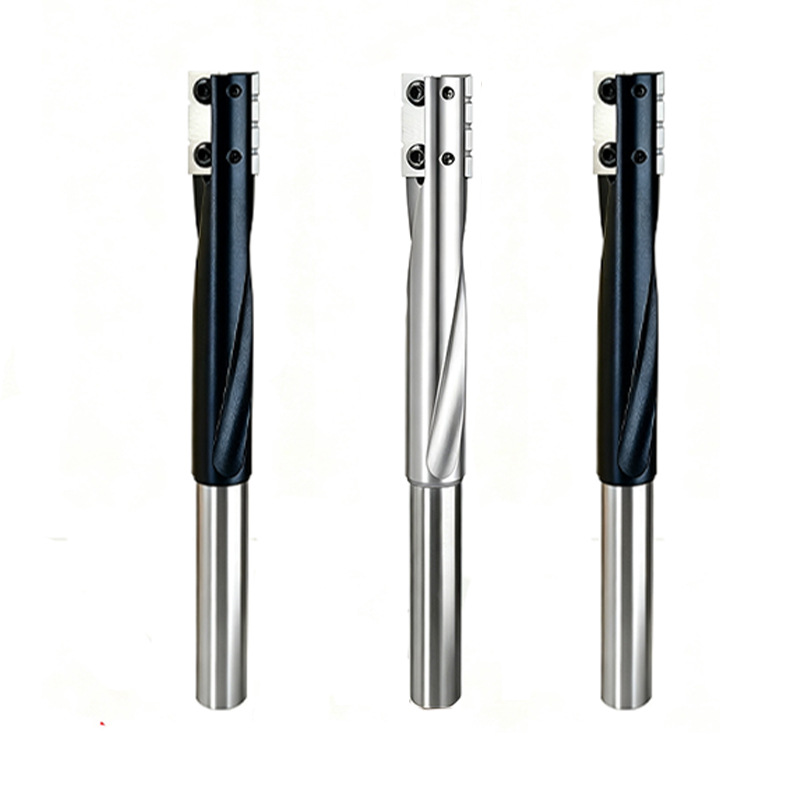
Solid carbide spiral router bits are essential high-precision woodworking CNC tools for modern furniture and panel production. They outperform traditional straight-flute cutters in cutting stability, surface finish and service life. A one-piece monolithic carbide body with continuous helical edges delivers smooth shear-style cutting and minimal vibration, which suits high-speed batch work. This guide covers the core advantages, flute classification, helix direction, machining methods and maintenance techniques behind them.
1. Core Advantages in High-Speed Woodworking
High-speed CNC machining now dominates modern woodworking, covering custom furniture, panel processing and solid wood shaping. Unlike traditional low-speed manual routing, high-precision work places strict demands on the cutter. Conventional HSS straight bits are cheap, but their intermittent cutting structure creates excess friction and unstable cutting force. Those drawbacks cause wood fibre tearing, edge chipping and workpiece burning during long continuous runs.
For this reason, solid carbide spiral router bits have become the preferred industrial-grade option. Unlike rigid straight-flute designs, helical edges keep continuous, stable contact with the wood. That feature spreads cutting pressure evenly, suppresses vibration and adapts to both forward and reverse grain. Among woodworking CNC tools, spiral bits also bring several practical advantages to production.
- Free chip flow: the continuous spiral flute keeps chips moving, which supports fast feed rates and shortens cycle times.
- Finer finish: the shear cutting mode meets the finishing needs of veneered panels, high-grade solid wood furniture and decorative parts.
- Wide compatibility: these cutters handle softwood, hardwood, MDF, plywood, plastic sheet and thin aluminium.
- Dimensional stability: the rigid one-piece carbide body resists deformation, so batch accuracy stays consistent.
2. Flute Classification & Matching Rules
Flute quantity decides much of a spiral bit’s behaviour, because it sets gullet volume, rigidity, chip evacuation and cutting smoothness. Each specification has its own strengths, so matching flute count to the job balances efficiency against finish quality.
Two-flute spiral bits are the most versatile option for general workshops. They offer the largest gullet cross-section among mainstream sizes, so chips discharge quickly at low cutting resistance. They suit conventional grooving, side profiling, hole machining and everyday roughing or finishing.
Three-flute spiral bits prioritise stability and finishing precision. Gullet capacity is slightly smaller than on two-flute bits, yet the extra cutting edge spreads force more evenly. That advantage lets them handle heavy-load side cutting and high-precision finishing for high-end custom furniture.
Four-flute and six-flute spiral bits focus on rigidity and edge durability. Denser edges produce very fine results, but limited gullet space cannot support high-feed roughing with heavy stock removal. Use them for shallow slotting, fine profiling and finishing of high-hardness wood instead.
The matching principle is straightforward. More flutes give smoother cutting and a better finish, yet they cap feed speed and chip clearance. Fewer flutes allow faster feeding and heavier removal, at a small cost to finish quality. For general work, two flutes perform best overall; for demanding finishing, three flutes remain the better choice.
3. Helix Direction & Scenario-Based Selection
Helix rotation also shapes chip flow and shear force, and it decides which face stays burr-free. Spiral router bits come in three categories: up-cut, down-cut and compression, each with distinct edge protection and applications.
Up-cut bits use a positive helix that ejects chips upward. The upward shear leaves the bottom and back edges clean, although it can lift surface fibres and cause top-face fuzzing. They suit mortising, deep enclosed slots and vertical plunging, where the top edge is not critical.
Down-cut bits use a negative helix that pushes chips downward. That pressing shear compresses surface fibres and protects the top face completely. Chips may collect in deep slots, and slight burrs can appear on the bottom edge, so they suit veneered plywood, shallow grooving and trimming where the top face must look perfect.
Compression bits combine both designs in one body. The upper flute runs down-cut to protect the top surface, while the lower flute runs up-cut to polish the bottom edge. Chips exit toward the middle of the tool, so one pass gives burr-free results on both faces. That makes them indispensable for double-sided laminated panels, high-grade plywood trimming and premium hardwood profiling.
4. Machining Methods & Parameter Optimisation
Good cutters only perform at their best with standard technique and sensible parameters. Poor feeding or wrong settings still cause chipping, breakage and rough surfaces. Well-matched woodworking CNC tools therefore need both disciplined operation and tuned parameters.
Avoid direct vertical downward feeding in daily work. That motion brings the cutting edge into instant full contact, which shocks the brittle carbide and breaks edges. Edge feeding is safer: the tool descends without contact, then feeds laterally into the cut, which removes the impact risk.
For conventional precision work, diagonal trajectory feeding is the most practical choice. Axial depth increases gradually, so milling force rises steadily without a peak. Load on the tool and spindle drops, and fibre tearing becomes far less likely. For complex shapes and 3D cavities, use continuous spiral downward feeding, because its stable cutting state suits high-speed work and holds dimensional accuracy.
On parameters, industrial woodworking normally runs between 10,000 and 40,000 RPM. Higher speed shears fibres more finely and improves surface smoothness, but excessive speed builds friction heat, which overheats the tool, dulls the blade and burns the wood. Feed speed must follow machine precision, spindle power, clamping stability and material hardness instead of chasing maximum numbers.
5. Wear Mechanism & Anti-Wear Maintenance
Solid carbide spiral bits are sintered by powder metallurgy, so microscopic defects exist inside the body. Under alternating impact and constant friction, they suffer brittle fracture and plastic wear, which shortens life and raises costs. Woodworking CNC tools fail early when operators skip basic maintenance, so disciplined habits matter.
- Clean before mounting. Keep tool holders and clamping parts free of dust, because clean clamping prevents runout and eccentric wear.
- Choose rigidity for heavy loads. Prefer larger shank diameters when the cut is heavy, since rigidity resists vibration and deflection.
- Minimise overhang. Long overhang weakens stability and triggers high-speed vibration, which accelerates wear and chipping.
- Run in new bits. Run new spiral bits at 50% of normal speed first to polish edge burrs before batch production.
- Use climb milling for roughing. Climb milling lowers cutting resistance and evens out tool stress.
- Watch for vibration. If vibration rises, cut spindle speed and feed rate at once to prevent overload damage.
6. Conclusion
Solid carbide spiral router bits hold a central place in precision woodworking thanks to stable cutting, wide material adaptability and long service life. Sound selection means matching flute count and helix direction to the job and the material. Standard feeding methods and tuned parameters then unlock the remaining performance, while daily maintenance lowers wear and failure risk. For any buyer comparing woodworking CNC tools, standardised selection and operating discipline are what protect finished quality and hold down total cost.
Choosing Reliable Woodworking CNC Tools
Specifications alone rarely predict how a cutter behaves. Woodworking CNC tools differ in carbide grade, grinding accuracy and balance, and those differences show up only at speed. Ask suppliers for the carbide grade, the balance grade and the runout tolerance before comparing prices.
Balance matters most on spiral geometry, because flute grinding is harder to control than on a straight bit. Good concentricity keeps every flute cutting equally, and equal cutting keeps wear even. Test one bit through a full shift and inspect the edge afterwards; you will learn more from that single run than from any catalogue page.
Shops that run veneered panels and hardwood daily should keep two-flute and compression profiles on hand as standard woodworking CNC tools. Our woodworking CNC tools range covers the common diameters and shank sizes, and you can review our spiral router bits for CNC woodworking when planning a tooling changeover.
FAQ
Which spiral bit suits a general woodworking workshop?
Two-flute spiral bits are the best universal choice. They balance chip evacuation, stability and finish quality across most grooving, trimming and profiling work.
How do I choose between down-cut and compression bits for veneered plywood?
Pick a down-cut bit when only the top face must stay flawless. Choose a compression bit for double-sided visible work, because it cleans both faces in one pass.
What causes spiral bit damage in wood processing?
Damage usually comes from wrong flute selection, excessive overhang, poor clamping precision, mismatched parameters or blocked chip flow. Standard operation and correct selection prevent most failures.
Where should I buy woodworking CNC tools?
Buy from suppliers who publish carbide grade, balance grade and runout tolerance. Woodworking CNC tools from vendors unwilling to share those numbers rarely hold tolerance in production.