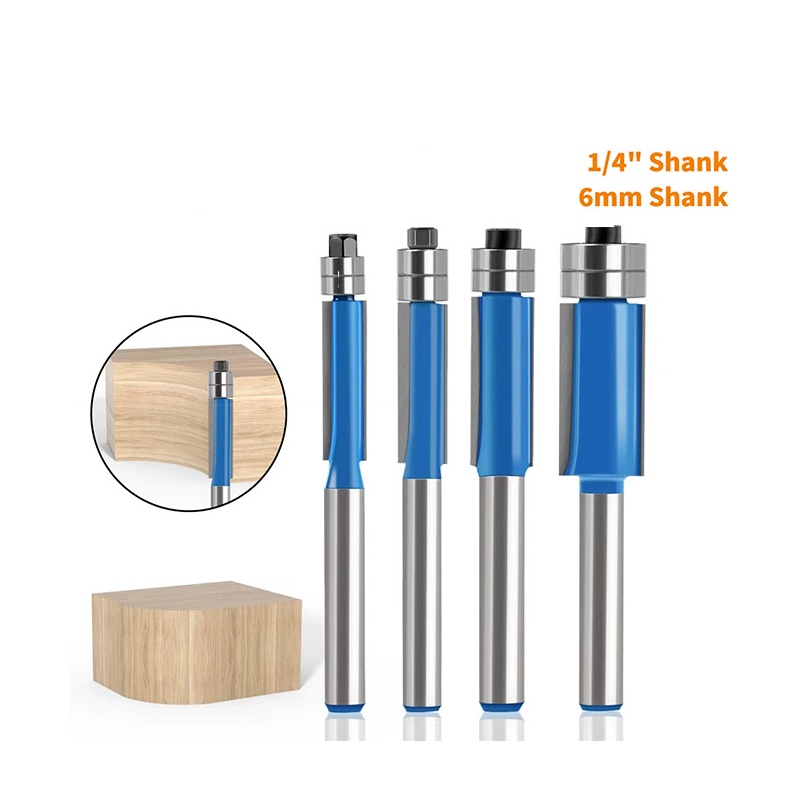
H1: Single Bearing vs Double Bearing Trimming Router Bits: Structural Differences and Selection Tips
Trimming router bits are mainly divided into single bearing and double bearing structures, and the bearing layout directly determines the cutting stability and application range of trimming router bits. Understanding their differences helps woodworkers select the most suitable tool for different trimming tasks.
Single bearing trimming router bits install the positioning bearing on one side of the cutter head. This structure is lightweight and flexible, suitable for simple edge trimming, shallow flush cutting and small-range material trimming. Single bearing trimming router bits are widely used in handheld wood trimmers, ideal for home workshop small-batch processing and daily wood repair work.
Double bearing trimming router bits adopt upper and lower double bearing positioning, which greatly enhances the vertical stability of the cutter during high-speed rotation. The dual-bearing design effectively prevents cutter shaking and cutting deviation, ensuring ultra-flat trimming surfaces. Double bearing trimming router bits are more suitable for high-precision template copying, large-area board trimming and long-time continuous processing.
In practical selection, casual trimming and light finishing work can choose single bearing trimming router bits for cost efficiency, while customized furniture batch production and high-precision edge shaping must use double bearing trimming router bits to guarantee workpiece consistency and yield rate.