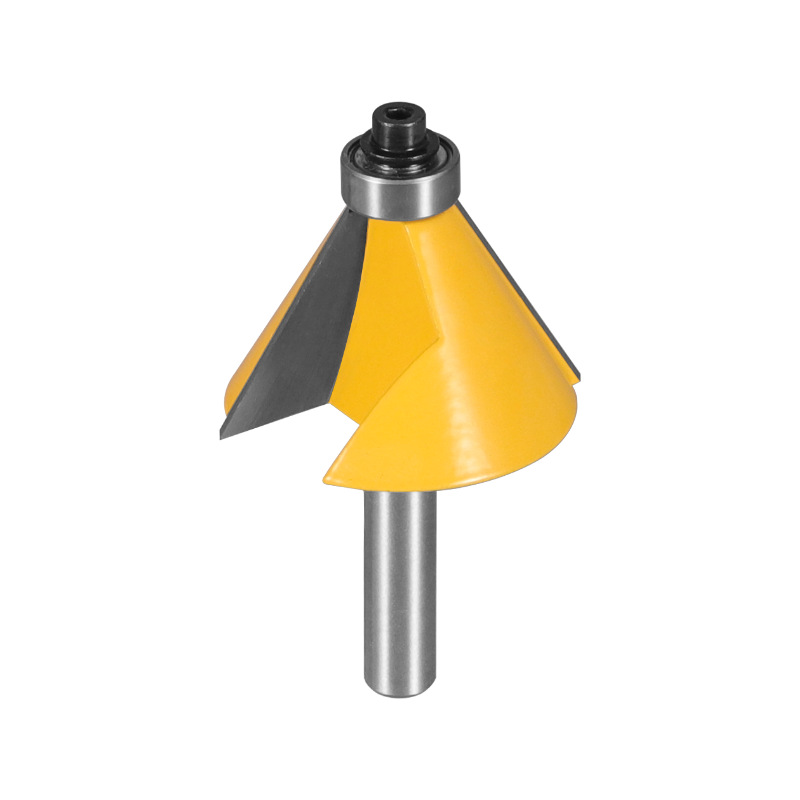
H1: Bevel Router Bit Selection Guide: Match Bits With Different Woodworking Materials
Material characteristics are the core basis for selecting a suitable bevel router bit. Different wood-based materials have distinct hardness, fiber density and wear resistance, requiring targeted woodworking router bit configurations in blade hardness, flute design and cutting angle.
For soft solid wood and ordinary plywood processing, conventional double-flute bevel router bits are sufficient for daily trimming and chamfering work. This basic woodworking router bit features low cutting resistance and smooth chip removal, ensuring clean and delicate edge finishing on soft wood materials with no board cracking.
For high-abrasive materials such as glue-rich laminate boards and coated decorative panels, high-hardness full-carbide bevel router bits are essential. Ordinary woodworking router bit tools wear quickly on these composite materials, leading to rough edges and tool damage. High-performance carbide bevel router bits resist abrasion effectively, maintaining long-term stable cutting quality.
Batch customized processing workshops should prioritize bearing-guided bevel router bits. This professional woodworking router bit supports template positioning and copying, ensuring consistent bevel specifications for mass-produced workpieces. Meanwhile, matching the correct shank diameter with routing equipment can reduce vibration, avoid cutting deviation, and further optimize the overall processing quality of wood products.